
Paying for a Second Home in Retirement: The Tax and Cash-Flow Math to Run First
A second home in retirement costs more than the purchase price. Here is how withdrawals, Medicare surcharges, two sets of bills and market timing change the math.
A winter home in the sun is one of the most common goals of a new retirement, and one of the easiest to get wrong. The purchase price is the number everyone focuses on. The numbers that decide whether a second home works are less visible: what it costs to pull the down payment out of retirement accounts, what two households cost to run, and how the plan holds up if the stock market drops in the first few years. Running those numbers before signing a contract is the difference between a retirement that includes a second home and one that revolves around it.
The Down Payment: Where the Money Comes From Matters
For many retirees, most of their savings sits in traditional IRAs and 401(k)s. That money has never been taxed, so every dollar withdrawn counts as ordinary income on the federal return, and on a state return if the retiree's home state has an income tax.
That has three practical effects:
- The withdrawal has to be larger than the cash needed. To end up with $100,000 after tax at a 22% federal rate, a retiree has to withdraw roughly $128,000, and more if state tax applies. A single large withdrawal can also push part of it into a higher bracket.
- Younger retirees may owe an extra tax. Withdrawals from a traditional IRA before age 59½ generally carry a 10% additional tax on top of income tax, unless an exception applies.
- Medicare premiums can rise two years later. Medicare's income-related surcharge (IRMAA) is set using the tax return from two years earlier. A one-time withdrawal for a down payment can raise Part B and Part D premiums for a year, well after the purchase. A large withdrawal can also make more of a retiree's Social Security benefit subject to federal tax that year.
Ways to soften the hit include spreading withdrawals across two or more tax years, using money from taxable savings or a Roth account where withdrawals may be tax-free, or financing part of the purchase instead of paying all cash. Each choice has trade-offs, so a tax professional should run the numbers for the specific accounts involved.
Carrying Costs: Budget for Two Households
A second home doesn't replace the first. It adds a full set of bills, most of which continue in the months nobody is there:
- Mortgage payment, if the purchase is financed.
- Homeowners insurance, which varies widely by region. Coastal and wildfire-prone areas have seen sharp increases, so get a real quote before making an offer.
- Property taxes. Many states give primary residences protections that second homes don't get. In Nevada, for example, the yearly increase in property tax is capped at 3% for a primary residence, but a second home can rise by up to 8% a year.
- HOA dues and assessments. Read the association's budget and reserve study. An underfunded reserve can lead to a special assessment for a roof or repaving.
- Utilities while empty, plus a monitoring service or caretaker to check on the home.
- Maintenance on both properties, and the travel between them.
Adding these up over a full year, for both homes, gives the true annual cost. Comparing that figure to retirement income, rather than to savings, shows whether the plan is sustainable.
Market Timing: Why the First Few Years Matter Most
Financial planners call it sequence-of-returns risk. When a retiree is withdrawing money every year, a market decline early in retirement does more damage than the same decline later, because investments get sold at low prices to cover expenses and aren't there for the recovery. A second home raises the stakes, because its costs keep coming no matter what the market does.
Keeping one to two years of expected expenses in cash or short-term savings, separate from long-term investments, gives a buffer that avoids forced selling in a down year. The question to ask before buying: could the plan still cover both homes if investments fell 20% in the first year?
Can Rental Income Pay for It?
Many buyers plan to rent the second home while they're away. It can help, but it rarely covers the full cost:
- Rules come first. HOAs often restrict short-term rentals or require minimum lease terms, and many cities license or limit vacation rentals.
- The best months are taken. Snowbirds use the home during peak season, which is when rental demand and rates are highest. The months left over are the hardest to rent.
- Management and wear add up. An owner living elsewhere usually needs a local property manager, plus cleaning, repairs and furnishing replacements.
- Rental income is taxable, and renting the home affects how it's treated for tax and mortgage purposes. Talk to a lender and tax professional before buying with rental income in mind.
Which State Taxes the Retirement Income
Owning a home in a state with no income tax doesn't, on its own, move a retiree's tax residence there. States generally tax residents based on domicile, the place considered the permanent home, which is shown by where someone spends most of the year, is registered to vote, holds a driver's license and files taxes. A retiree who keeps a primary home in a high-tax state and winters in a no-income-tax state usually still owes the home state's income tax. Retirees who want the tax benefit typically have to make the new state their true primary home.
Rent First, Then Decide
Renting for a season or two costs money, but it avoids the transaction costs of buying a home and then selling it a few years later, which include closing costs at purchase and agent commissions and closing costs at sale. A few seasons of renting also shows what matters before committing: whether the town feels right, which neighborhood fits, and how long the household actually wants to stay each year.
A Pre-Purchase Checklist
- List every source of the down payment and estimate the tax on each withdrawal.
- Check whether the withdrawal year could trigger a Medicare surcharge two years later.
- Add up a full year of costs for both homes, including insurance quotes and HOA dues.
- Read the HOA's budget, reserve study and rental rules.
- Confirm which state will be the tax home, and what it takes to change it.
- Keep enough cash outside the market to cover both homes through a down year.
Where Mesquite, Nevada Fits
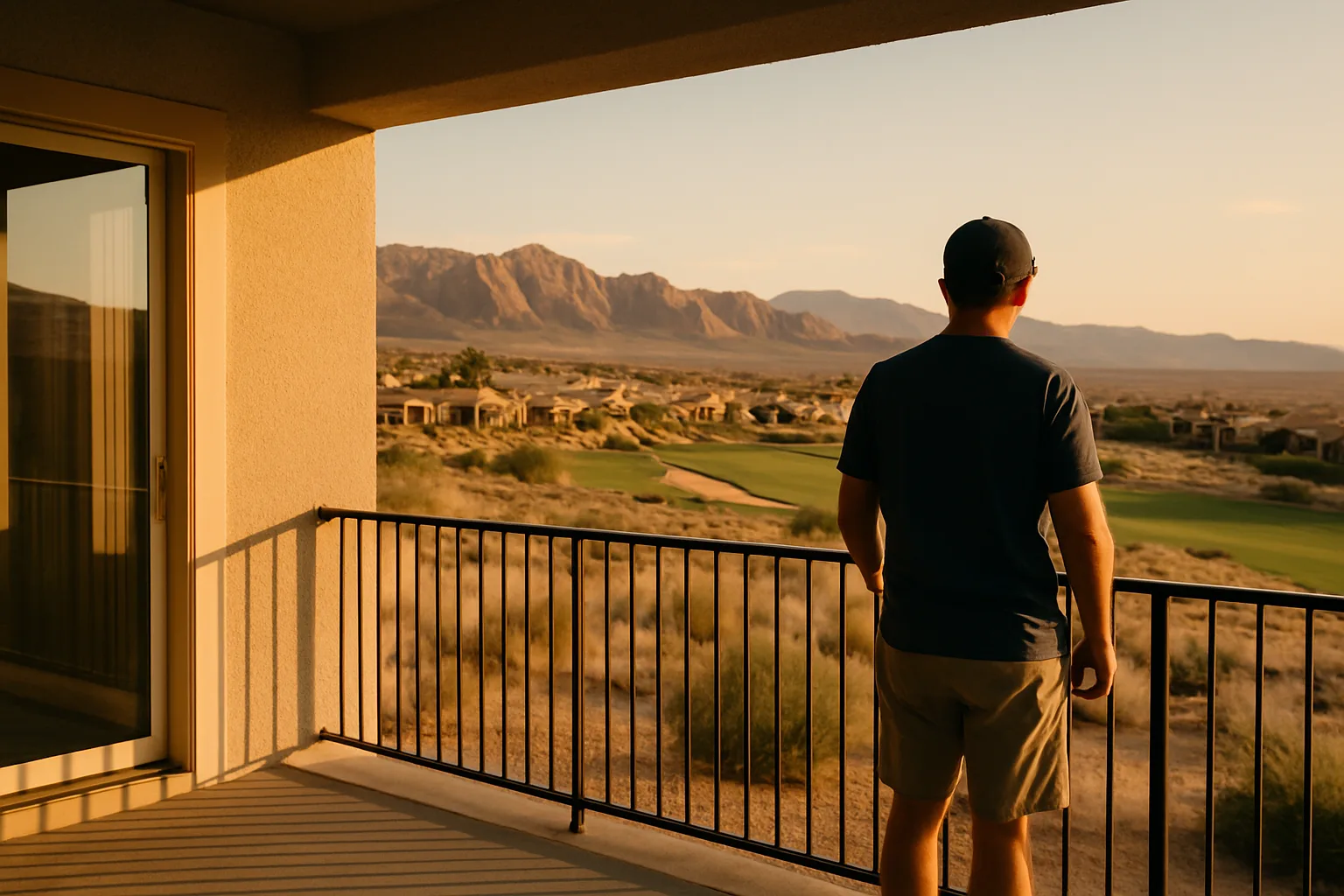
Mesquite, in Southern Nevada's Virgin River Valley, is a popular winter base for retirees, and several features line up with the math above. Many condo and townhome associations cover the building exterior, landscaping and the pool, and dues on many Mesquite condos also include water, sewer and trash, which keeps the cost of an empty home predictable. Nevada has no personal income tax, which matters to retirees who make Mesquite their primary home. Vacation rentals are a permitted use in many residential areas under a city ordinance passed in September 2026, though each HOA can set stricter rules.
The guide to wintering in Mesquite compares renting, RV resorts and buying a lock-and-leave home, and the Mesquite condo guide lists HOA dues and sale prices complex by complex. The explainer on Nevada's property tax cap covers the primary-versus-second-home difference in detail. Current listings are on the Mesquite homes for sale page, and Homes For Sale In Mesquite Nevada can help with specific properties.
Frequently asked questions
Should I use my IRA or 401(k) to buy a second home in retirement?
It can work, but withdrawals from traditional IRAs and 401(k)s are taxed as ordinary income, so a retiree has to withdraw more than the cash needed. A large one-year withdrawal can also raise the tax bracket, increase how much Social Security is taxed, and raise Medicare premiums two years later. Spreading withdrawals over several years or financing part of the purchase can reduce the impact.
Does a big IRA withdrawal raise Medicare premiums?
It can. Medicare's income-related monthly adjustment amount (IRMAA) is based on income from the tax return two years earlier, so a large withdrawal in one year can raise Part B and Part D premiums two years later.
Is there a penalty for withdrawing from an IRA to buy a house before age 59½?
Withdrawals from a traditional IRA before age 59½ generally carry a 10% additional tax on top of income tax, unless an IRS exception applies. A tax professional can confirm whether any exception fits a specific situation.
Are property taxes higher on a second home?
Often, because many states protect primary residences in ways they don't protect second homes. In Nevada, the yearly property tax increase is capped at 3% for a primary residence but can be up to 8% a year for a second home.
Does owning a home in Nevada mean I don't pay state income tax?
Not by itself. States generally tax residents based on domicile, the place that is someone's permanent home. A retiree who keeps a primary home in another state and winters in Nevada usually still owes the home state's income tax.
Is it better to rent before buying a snowbird home?
For many retirees, yes. Renting for a season or two avoids paying closing costs and commissions on a home that might be sold a few years later, and it shows which town, neighborhood and length of stay actually fit before committing to a purchase.
Homes for sale in Mesquite, Nevada
Thinking about a move to Mesquite?
Browse every active listing — Sun City 55+, golf-course homes, new construction and more — updated multiple times a day. Or talk to a local agent who knows the neighborhoods.
Keep reading
More from the blog

Phoenix, Las Vegas or Mesquite? How Retirement Income Decides Where Retirees Save

I-15 Between Mesquite and Southern California: What Is Changing on the Drive
Where Mesquite's $700K+ Homes Sell: Golf, View and Custom-Home Areas in 2026