Building for the Heat: Home Improvements That Hold Up in Mesquite's Desert Climate
Mesquite's triple-digit summers and sharp overnight temperature swings put unique stress on homes. This guide covers the renovations — from heat-treated metal fixtures to reflective roofing and sealed HVAC systems — that genuinely hold up in the Mojave Desert and pay off at resale.
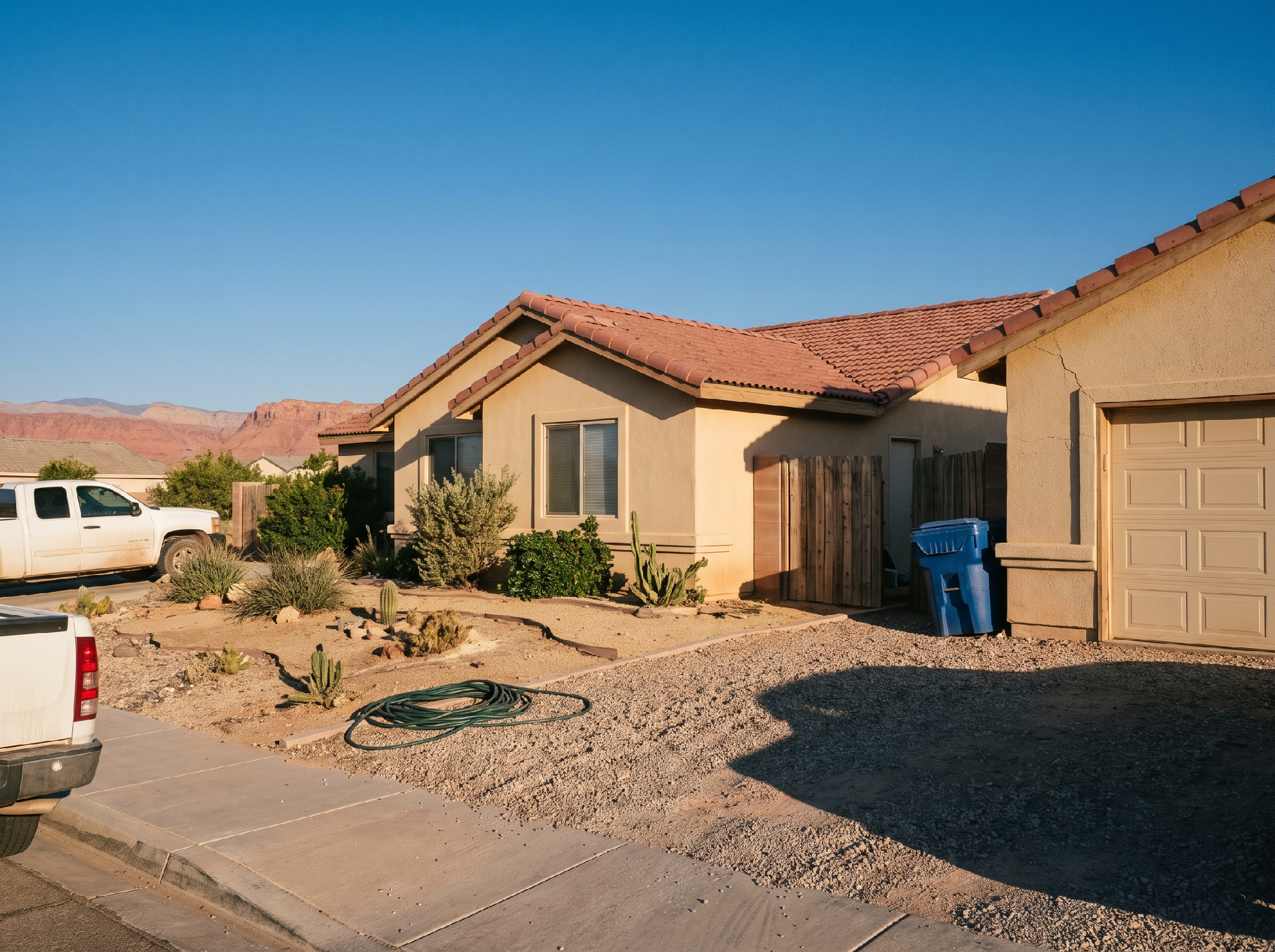
Single-story stucco home with a clay tile roof and gravel xeriscape yard in Mesquite, Nevada, lit by late afternoon sun with red rock mesas in the distance
Mesquite summers don't ease in gradually. By late May, daytime highs are already pushing past 100 degrees, and they stay there well into September. That kind of sustained heat, paired with wide day-to-night temperature swings, puts a different kind of stress on a house than milder climates ever will. Materials expand, contract, crack, and fade in ways that simply don't happen in Seattle or Minneapolis.
For homeowners and buyers in Mesquite, that means the usual renovation advice doesn't always apply. Some upgrades that look great on paper fail within a few years out here, while others that seem unglamorous quietly protect a home's value for decades. This guide walks through the improvements that actually hold up in the Mojave Desert, and where the money spent on them pays off at resale.
Metal Fixtures and Fabrication: Why Desert Heat Changes the Rules
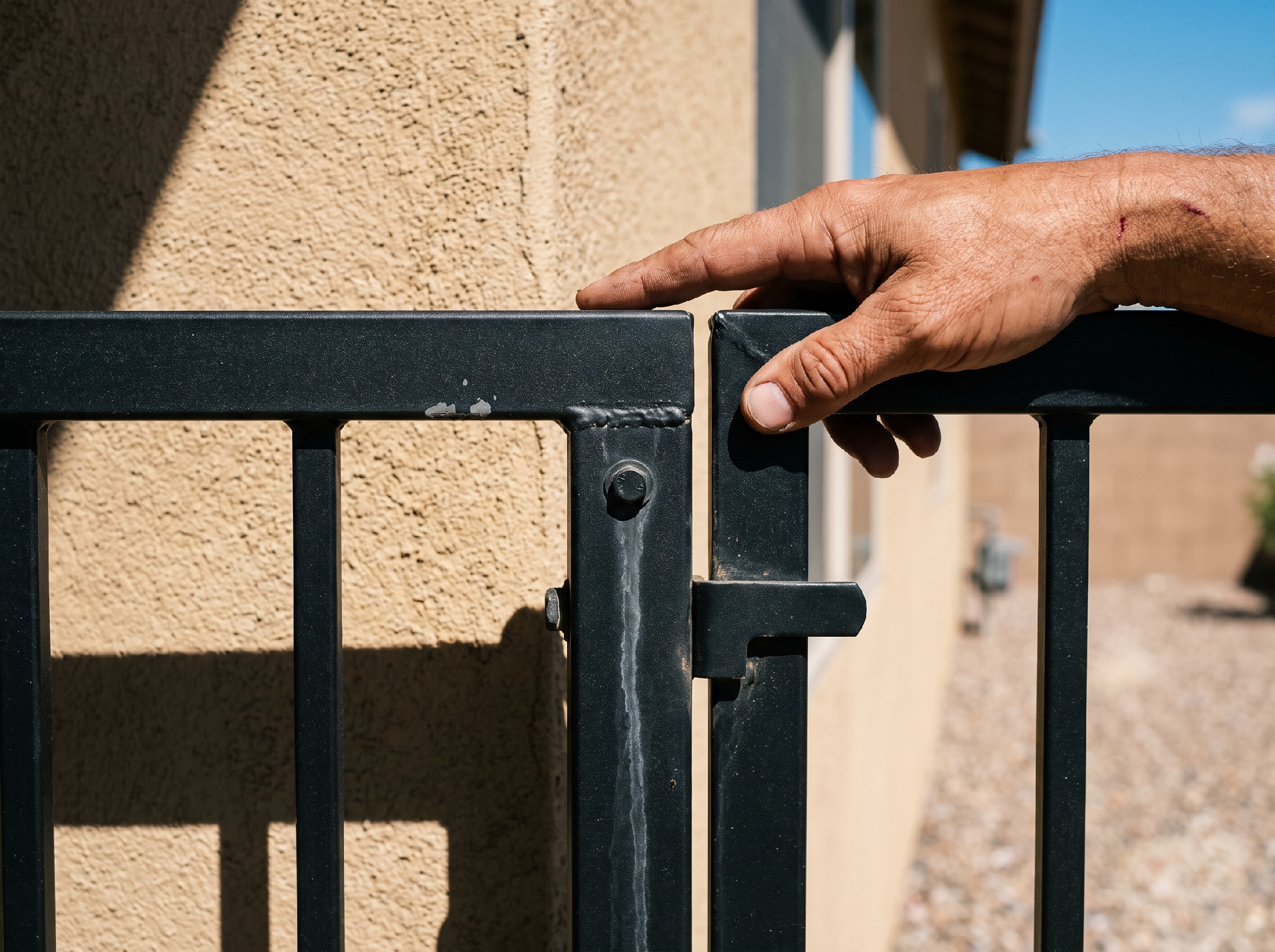
Close-up of a black powder-coated steel gate and latch mounted to a stucco wall, with a weathered hand resting on the top rail in harsh desert sunlight
Railings, gates, pergola frames, and custom patio structures are some of the most popular exterior upgrades in Mesquite, and for good reason. Metal holds up better against sun exposure than most woods, and it gives a home a clean, modern look that sells well in Southern Nevada's market. But metal has its own weakness out here, and it's one most homeowners never think about until a gate starts sticking or a weld starts cracking.
Direct sun on exposed metal in the desert Southwest can push surface temperatures above 150 degrees, and that same surface can drop 40 degrees or more once the sun goes down, according to industry analysis from metal fabricator Endura Steel. That daily swing is called thermal cycling, and it's tough on metal components. Fasteners work loose. Panels warp slightly, then warp a little more the next day. Welds that weren't properly relieved of internal stress during manufacturing can develop hairline cracks over a few summers.
This is why contractors working in hot climates increasingly specify components that have gone through industrial heat treatment services before installation. Heat treatment relieves the internal stress that builds up in metal during welding and fabrication, which makes the finished railing, gate, or frame far more resistant to warping and fatigue once it's exposed to years of desert thermal cycling. It's a manufacturing step most homeowners never see, but it's the difference between a gate that swings smoothly a decade later and one that needs rehanging every other summer.
Insulation and HVAC: The Upgrades That Actually Cut Cooling Costs
Metal fixtures matter, but nothing affects a Mesquite home's comfort and utility bills more than insulation and HVAC performance. Air leakage alone can account for up to 40% of cooling loss in hot-climate homes, according to a 2025 analysis from Insulation Contractors of Arizona. That's a staggering share of your cooling budget escaping through gaps most homeowners never notice: attic hatches, recessed lighting, duct joints, and window frames that have shifted slightly after years of expansion and contraction.
Attic insulation is usually the first place to look. Many Mesquite homes were built to older energy codes, and topping up attic insulation to current R-value recommendations is often the single fastest payback improvement available. Sealing HVAC ductwork and replacing worn filters matter almost as much. A properly sealed, right-sized HVAC system doesn't have to work nearly as hard to hold a comfortable indoor temperature when it's 105 degrees outside. If you're choosing new windows as part of a broader energy upgrade, our guide to the best windows for hot desert climates covers the SHGC ratings and frame materials that matter most in Southern Nevada.
We've written before about how post-renovation cleanup, including duct and vent maintenance, factors into a pre-sale upgrade that pays for itself, and the same logic applies here. Clean, sealed systems don't just run more efficiently, they last longer too.
Homeowners weighing the cost of these upgrades should also look at the ENERGY STAR federal tax credits for energy efficiency, which can offset a meaningful chunk of the expense for qualifying insulation and HVAC work.
Roofing Choices That Survive Southern Nevada Summers
Roofing is where the desert climate makes some material choices obvious and others risky. Standard asphalt shingles absorb heat, degrade faster under intense UV exposure, and often need replacement well before their rated lifespan in a climate like Mesquite's.
Metal roofing performs differently. It reflects up to 90% of solar radiation, according to the U.S. Department of Energy, which makes it one of the more energy-efficient roofing choices available for extreme-heat regions. Clay and concrete tile are also strong performers here, with a long track record in the Southwest and the added benefit of thermal mass that helps regulate indoor temperature swings.
Cost matters too, and metal or tile roofing carries a higher upfront price than asphalt. But when a roof lasts twice as long and cuts cooling costs every single summer, the math tends to favor the more durable option, especially for homeowners planning to stay put for a decade or more. The Department of Energy's Energy Saver guide to cool roofs breaks down how reflective roofing materials reduce attic heat gain in more technical detail.
What These Upgrades Mean for Resale Value in Mesquite
Mesquite's housing market has stayed active through 2026, with the median home price sitting around $419,000 and active inventory climbing from 275 listings in July to 293 in August, a pace that's giving buyers a bit more room to negotiate than they had a year earlier. In a market like that, upgrades that stand out matter more, not less.
Energy efficiency is no longer a nice-to-have footnote in a listing. According to the National Association of Realtors' 2025 REALTORS Residential Sustainability Report, 58% of real estate professionals say highlighting energy-efficient features in a listing adds value, and 72% say utility and operating costs rank as a top priority for their clients. That's a clear signal: buyers are asking about cooling costs and durability before they ever make an offer, not after.
The upgrades covered here — heat-resilient metal fixtures, sealed and insulated HVAC systems, and reflective roofing — aren't just about comfort during a Mesquite summer. They're the kind of improvements that show up favorably in an inspection and give a listing agent something concrete to point to. If you're budgeting out a major remodel, it's worth weighing how each dollar performs against Nevada's climate, not just how it looks in photos. You can read more from NAR's newsroom coverage of buyer interest in energy efficiency for a broader look at how this trend is playing out nationally.
Planning Your Desert-Ready Renovation
A blank real estate yard sign standing in a gravel front yard of a Southern Nevada home, with tile-roofed houses and desert mountain ridges behind it
Not every homeowner can tackle every upgrade at once, so prioritization matters. Insulation and HVAC sealing tend to deliver the fastest payback and the most immediate comfort improvement, so they're a sensible place to start. Roofing comes next, particularly if the current roof is already nearing the end of its life. Metal fixtures and fabrication upgrades round things out; they're often more about curb appeal and long-term durability than immediate savings, but they matter to buyers who are increasingly paying attention to features buyers now expect as standard in a Southern Nevada home.
Before listing, it's also worth reviewing the best rooms to update before listing your home for sale — targeted interior improvements pair well with the exterior and mechanical upgrades covered here, and together they give buyers a complete picture of a well-maintained property.
A homeowner can address these areas over a year or two, prioritizing based on what's aging fastest, and still see the benefit at resale.
The Bottom Line for Mesquite Homeowners
Desert heat doesn't forgive shortcuts. Materials and systems that aren't built for triple-digit summers and sharp overnight temperature drops wear out faster here than almost anywhere else in the country, and homeowners end up paying for that twice: once in repairs, and again when a buyer's inspector flags it.
The upgrades that hold up in Mesquite aren't necessarily the flashiest ones. They're the ones engineered with this climate in mind, from properly treated metal fixtures to sealed HVAC systems and reflective roofing. Homeowners who plan renovations around heat resilience tend to spend less on maintenance, use less energy every summer, and present a stronger case to buyers who are already asking the right questions before they make an offer.
Frequently asked questions
What home improvements add the most value in Mesquite, Nevada's desert climate?
How hot does it get in Mesquite, NV and how does it affect a home?
Is metal roofing worth the cost for a home in Mesquite, Nevada?
What is the average home price in Mesquite, NV right now?
How much can attic insulation reduce cooling costs in a Southern Nevada home?
What should I look for in a home inspection when buying in Mesquite, NV?
Homes for sale in Mesquite, Nevada
Thinking about a move to Mesquite?
Browse every active listing — Sun City 55+, golf-course homes, new construction and more — updated multiple times a day. Or talk to a local agent who knows the neighborhoods.
Keep reading
More from the blog
Apartment Door Numbers for Phased Residential Projects
Home Buying Affordability: Financial Planning for Mesquite
Moving to Mesquite, Nevada: 5 Trade-Offs to Evaluate Before Buying