
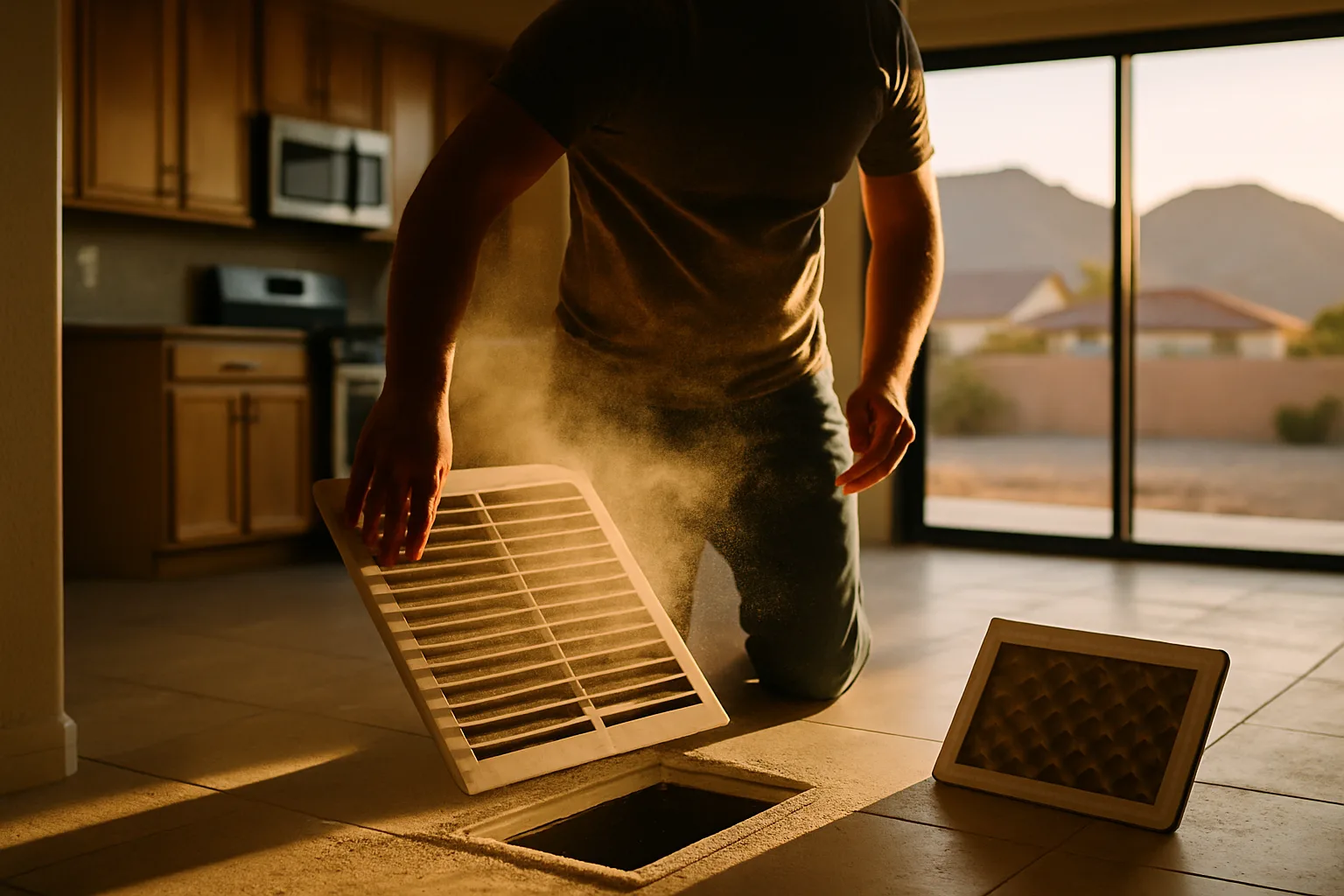
Renovation Dust in Air Vents: What Homeowners Should Do After Remodeling
Renovation dust in air vents is a common post-remodeling problem, but it doesn't always mean your entire duct system is compromised. This guide walks homeowners through cleaning vent covers, replacing HVAC filters, spotting deeper contamination, and knowing when professional duct cleaning is truly warranted.
You finally finish your remodeling project and the room looks pristine, but one persistent problem remains: a fine layer of construction dust keeps appearing around vent covers and settling on nearby surfaces. Activities like sanding drywall, cutting timber or tile, and general demolition create fine, lightweight particles. Some of these particles can remain airborne for extended periods or become airborne again after settling, easily finding their way into your supply and return vents. Dealing with this lingering dust does not automatically mean your ventilation system is compromised. In this guide, you will learn what you can safely clean yourself, when to replace your HVAC filter, how to recognize signs that debris has traveled deeper into your system, and when professional duct cleaning is actually justified.
How Renovation Dust Gets Into Your Air Vents
Remodeling activities produce unusually high amounts of fine airborne debris that standard household cleaning cannot easily manage. Drywall sanding produces large amounts of fine airborne dust, including particles small enough to remain suspended for extended periods. Sawdust from wood cutting, along with tile, plaster, masonry particles, and heavy demolition debris, generate airborne matter that circulates long after work ends.
As these particles float, they are pulled into return vents—the openings that draw air back into your heating and cooling system. From return vents, dust travels toward the HVAC equipment and filter. If particles bypass the filter, the filter is overloaded or poorly fitted, or dust enters supply openings directly during construction, contamination can reach other system components or ductwork. Running your HVAC system during particularly dusty work significantly increases the chance of these fine particles being suctioned into the system. Even minimal human movement in the room can cause settled dust to become airborne again, restarting the cycle and allowing more debris to enter the ductwork.
Clean the Vent Covers and Accessible Openings First
Before assuming your entire duct system needs professional cleaning, the safest first step is to address the immediate surface area. Visible renovation dust around a register does not automatically mean the deeper ductwork is heavily contaminated.
Start by switching your HVAC system completely off to stop dust from traveling through the ducts. Carefully remove the vent covers where appropriate. Using a HEPA-filtered vacuum attachment, vacuum the loose dust. Vacuums without effective fine-particle filtration can exhaust some dust back into the room. Once vacuumed, wipe or wash the removable vent covers if the material allows. Clean the dust around the immediately accessible section of the vent opening—do not insert tools deep into the ductwork or attempt to dismantle any HVAC components yourself. Finally, make sure the vent covers are fully dry before reinstalling them to prevent trapping moisture.
Replace the HVAC Filter Before You Run the System Again
If your heating or cooling system operated during sanding, demolition, or other dusty work, fine particles can quickly fill the filter's pleats. After removing visible dust from the vents and before returning the HVAC system to normal use, inspect the existing filter. If a disposable filter is visibly dirty, clogged, or heavily coated with construction debris, replace it. Reusable filters should be maintained according to the manufacturer's instructions. If a disposable filter needs replacing, homeowners can compare furnace air filters by size and filtration level, while confirming that the selected filter is compatible with their HVAC system.
When replacing the filter, check the correct dimensions, thickness, and filtration level specified for your system. Do not simply buy the highest filtration rating available. Choose the highest efficiency your system and filter slot are rated for, since a filter that restricts more airflow than the system was designed for can reduce performance and, in some cooling systems, contribute to coil icing. If you are planning a larger home improvement project, reviewing a guide to planning the financial side of your renovation can help you budget for these kinds of post-project maintenance costs.
How to Tell Whether Dust Has Gone Deeper Into the Ductwork
Once you have cleaned the surfaces and checked the filter, you should determine whether this is a simple surface-cleaning issue or a potentially deeper HVAC contamination problem. No single sign automatically proves the whole duct system is contaminated, but several indicators warrant a closer inspection.
Using a flashlight, check for visible debris farther inside the register opening. Pay attention to dust blowing from the vents after the covers have already been cleaned, or fresh dust returning unusually quickly. Contamination is also more likely if the HVAC vents were left uncovered during major sanding or demolition, or if the system operated continuously during the dusty renovation work. Finally, check if large amounts of construction debris have visibly entered the return-air openings. If you notice a combination of these signs, additional inspection of the broader ventilation system may be justified.
Do You Need Professional Duct Cleaning After a Renovation?
Professional duct cleaning should not automatically be treated as a requirement after every renovation project. In fact, routine duct cleaning has never been proven to prevent health problems or significantly lower dust levels in standard settings. However, intervention is worth considering under specific, verifiable conditions.
You should consider professional cleaning when substantial construction debris visibly entered the system, or when dust continues blowing from vents even after thorough surface cleaning and filter replacement. It is also justified if large amounts of debris are visible deeper inside accessible ductwork, or if the HVAC system operated heavily throughout major demolition or drywall sanding without adequate protection. Finally, cleaning is appropriate if a qualified HVAC professional identifies clear contamination that warrants it.
Always base your decision on actual signs of physical contamination rather than assuming every remodeling project requires professional extraction. Effective cleaning must be executed as a whole-system service to extract contaminants, rather than just brushing localized duct runs. Homeowners in Mesquite's desert climate should also be aware that choosing the right windows can reduce the amount of outdoor dust and particulates entering the home in the first place.
Clear the Remaining Fine Dust From the Rest of the Home
Cleaning your vents alone will not solve the problem if fine construction dust remains elsewhere in the room. Human activity, like simply walking across the floor, triggers particle resuspension, causing settled debris to become airborne again and eventually re-enter your vents.
To stop this cycle, use a HEPA vacuum to capture ultra-fine particles, followed by damp microfiber cleaning. Avoid dry dusting where possible, since it can resuspend fine particles; damp wiping is generally more effective for capturing settled dust. Wipe down walls, trim, shelves, and cabinetry top-to-bottom. Pay special attention to window tracks and ledges where dust easily accumulates. Clean all floors, skirting, and baseboards thoroughly. You must also vacuum upholstery, curtains, rugs, and other soft furnishings that trap microscopic matter. Finally, ventilate with clean outdoor air when weather and outdoor air quality permit. Removing leftover dust from these surrounding surfaces is an important part of preventing post-renovation particles from recirculating through the home. If you are preparing to sell, note that the rooms buyers scrutinize most are exactly the ones where post-renovation dust is most visible.
How to Keep Dust Out of Your Vents During the Next Renovation
Preventing construction debris from entering the HVAC system is much easier than dealing with persistent dust afterward. For future projects, isolate the renovation area by sealing doorways with plastic sheeting. Control dust at the source by moving dust-heavy tasks, like sanding and cutting, outdoors whenever possible. Protect appropriate vent openings during dusty work; close the registers and seal them to prevent debris from falling directly into the openings.
Discuss HVAC use with your contractors, ensuring the system remains completely shut down during major dust-producing stages. Before returning the system to normal operation, clean the work area thoroughly and inspect the HVAC filter once major dusty work is finished. After any remodeling, always work in a strict order: remove visible dust, clean accessible vents, inspect or replace the filter, and only investigate deeper duct cleaning when there is concrete evidence that it is necessary.
Frequently asked questions
How long does renovation dust stay in the air after remodeling?
Should I run my HVAC system while remodeling or keep it off?
How do I know if construction dust has contaminated my ductwork?
What HVAC filter should I use after a renovation project?
Is professional duct cleaning necessary after every home renovation?
What is the best way to clean renovation dust from a room without spreading it?
Homes for sale in Mesquite, Nevada
Thinking about a move to Mesquite?
Browse every active listing — Sun City 55+, golf-course homes, new construction and more — updated multiple times a day. Or talk to a local agent who knows the neighborhoods.
Keep reading
More from the blog
Apartment Door Numbers for Phased Residential Projects

Home Buying Affordability: Financial Planning for Mesquite

Moving to Mesquite, Nevada: 5 Trade-Offs to Evaluate Before Buying