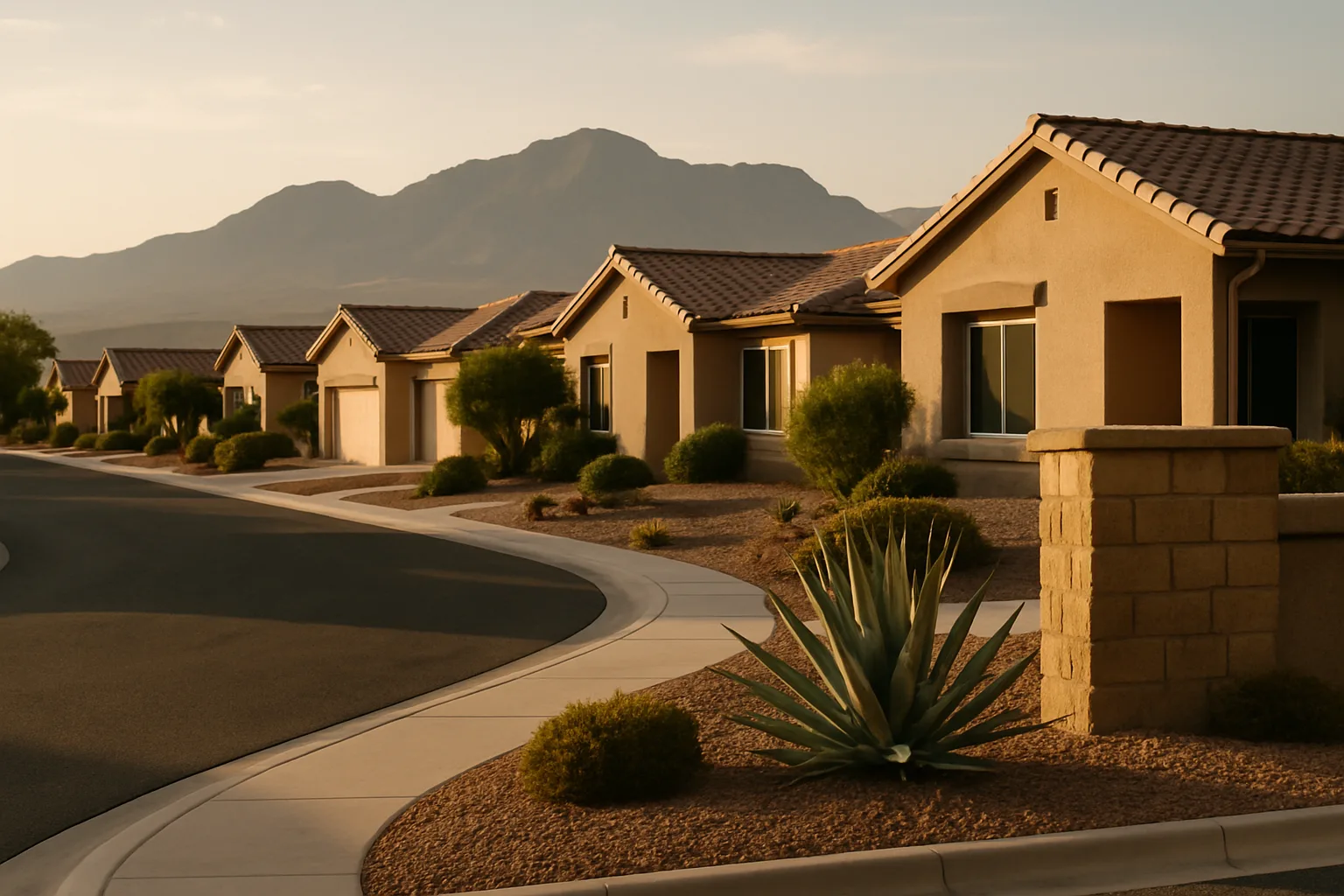
HOA or No HOA? How to Decide Which Neighborhood Fits
HOAs bring amenities and standards but also dues and rules. Here's how to decide, the Nevada laws that protect buyers, and why 87% of Mesquite home sales are in an HOA.
Few questions divide homebuyers as sharply as whether to buy in a neighborhood with a homeowners association. Some buyers have lived under a strict HOA and never want another violation letter. Others won't consider a home without one, because they want the streets kept tidy, the common areas maintained and the neighbors held to the same standards. Neither choice is better in general. The right one depends on how a buyer wants to live, and on the specific HOA, because no two associations are alike.
What an HOA Does
A homeowners association is a private organization, usually created by the developer, that enforces a neighborhood's covenants, conditions and restrictions (CC&Rs) and maintains shared property. Every owner is a member and pays dues. Depending on the community, the association may maintain:
- Common landscaping, walls, gates and private streets
- Pools, clubhouses, fitness centers, parks and trails
- In some communities, front-yard landscaping or the exteriors of the homes themselves
The association also sets and enforces rules: architectural approval for exterior changes, limits on parking, rules for rentals and standards for yard upkeep. An elected board of owners runs it, often with a professional management company.
The Case for an HOA
- Consistent upkeep. Rules on exterior maintenance, parking and storage keep a neighborhood's appearance consistent, which many buyers see as protecting home values.
- Amenities. Dues pay for pools, clubhouses and other shared facilities that would be costly to own privately.
- Less work. In communities where the HOA handles landscaping or exteriors, owners have less to maintain, which appeals to retirees and part-year residents.
- Security for seasonal owners. Gated communities and well-kept neighborhoods give snowbirds more confidence leaving a home empty for months.
The Case Against
- Ongoing cost. Dues continue for as long as the home is owned, and they can rise. Associations can also levy special assessments for large repairs.
- Rules and approvals. Paint colors, landscaping, fences, patio covers and solar panels may need approval. Restrictions on parking RVs, boats or trailers are common.
- Enforcement. Associations can impose fines for violations, and unpaid dues can become a lien on the home.
- Management quality. Many complaints about HOAs are really about management: slow answers, long approval times or uneven enforcement.
No HOA Doesn't Mean No Rules
A home outside an HOA is still subject to city or county zoning, setbacks, building permits and code enforcement. Owners can't simply build anything or park anything they like. The difference is that public agencies enforce those rules, usually in response to complaints, rather than an association that inspects the neighborhood. Some non-HOA neighborhoods are beautifully kept. Others are less predictable, which is why buyers should look closely at the street, not just the house.
HOAs in Mesquite, Nevada
In Mesquite, the HOA question has a lopsided answer: most homes have one. Over the 12 months through October 2026, about 87% of single-family homes sold in Mesquite, 461 of 527, were in an HOA, according to MLS data. The median listed HOA fee on those homes was about $140 a month, with most falling between about $70 and $175. In mid-October 2026, 190 of the 209 single-family homes for sale in Mesquite had an HOA.
The fees vary because the communities do. A small association that maintains a few walls and common areas costs far less than a gated golf community or Sun City Mesquite, whose dues cover clubhouses, pools and recreation programs. Condo and townhome dues are typically higher, since they often cover building exteriors, insurance and sometimes water.
Homes without an HOA are a small slice of the market. The 66 single-family homes sold without an HOA over the same 12 months sold for a median of about $398,000, compared with about $450,000 for HOA homes, and they tended to be older, with a median year built of 1997 compared with 2021. Buyers who want room for an RV, a shop or fewer rules often look at these older neighborhoods, at homes on larger lots or across the river in Bunkerville.
Nevada Rules That Protect Buyers and Owners
- The resale package. When a home in an HOA is resold, Nevada law requires the association to provide a resale package with the governing documents, budget, fees and other information. The buyer can cancel the purchase contract without penalty until midnight of the fifth calendar day after receiving it. That window is the time to read the CC&Rs and rules carefully.
- Desert landscaping. Under Nevada law, an HOA can't prohibit drought-tolerant landscaping, including decorative rock and artificial turf, in a yard the owner uses exclusively. The association can still require architectural review and a design compatible with the community.
- Help with disputes. The state's Office of the Ombudsman for Owners in Common-Interest Communities and Condominium Hotels, part of the Nevada Real Estate Division, provides education and helps with disputes between owners and associations.
Questions to Ask Before Buying in an HOA
- What do the dues include, and how much have they risen over the last few years?
- Is there a reserve study, and are reserves adequately funded? Low reserves can lead to special assessments.
- Are any special assessments planned or under discussion?
- What are the rules on parking, RVs, rentals, pets and exterior changes?
- Is the association involved in any lawsuits?
- How does the board handle architectural requests, and how long do approvals take?
Questions to Ask Before Buying Without One
- What does the zoning allow for parking, outbuildings, animals and home businesses?
- Who maintains the street, drainage and nearby open land?
- How are the neighboring properties kept, and is there vacant land nearby that could be developed?
- Are there any recorded deed restrictions, even without an HOA?
Matching the Choice to the Lifestyle
A few questions usually settle it. Does the household own an RV, boat or trailer that needs to be parked at home? Will the home sit empty for part of the year? Is a community pool or clubhouse important? How much yard work and exterior maintenance does the owner want to handle? Buyers who want amenities, low maintenance and consistent standards tend to be happiest in an HOA. Buyers who value flexibility, space and lower monthly costs often prefer a home without one, or an association with a light touch.
For a closer look at association costs, see the guide to comparing HOA fees in 55+ communities and the guide to Mesquite's 55+ communities. Buyers who want space and fewer rules can browse the Mesquite homes on acreage page or read the Bunkerville buyer's guide. Current listings are on the Mesquite homes for sale page, and Homes For Sale In Mesquite Nevada can help compare HOA rules and fees between neighborhoods.
Frequently asked questions
Is it better to buy a home with or without an HOA?
How many Mesquite, Nevada homes have an HOA?
How much are HOA fees in Mesquite?
Can I cancel a home purchase after reviewing the HOA documents in Nevada?
Can a Nevada HOA ban desert landscaping or artificial turf?
Are there rules if a home has no HOA?
Homes for sale in Mesquite, Nevada
Thinking about a move to Mesquite?
Browse every active listing — Sun City 55+, golf-course homes, new construction and more — updated multiple times a day. Or talk to a local agent who knows the neighborhoods.
Keep reading
More from the blog

Moving From California to Nevada: What Really Changes in Taxes and Costs
Buying a Home With a Pool: What It Really Costs to Own One

How the Iran War Pushed 30-Year Mortgage Rates Above 7% in 2026