What EV Owners Should Know Before Buying a Home in Mesquite, Nevada
Electric vehicle owners have a few extra boxes to check when shopping for homes in Mesquite, Nevada. From electrical panel capacity to charger installation costs and EV insurance, here's what to know before you buy.
When thinking about homes for sale in Mesquite, Nevada, one of the first things to consider for buyers of electric vehicles (EVs) is where to charge their cars.
Mesquite is a sunny town in southern Nevada and, as with any sunny city, that means a lot of sun.
A lot of sun can mean a lot of great things for EV owners, as well as some considerations when picking a home in which to put down roots.
In this article, we'll examine the considerations EV owners should make before buying a home in Mesquite.
Not Every Garage Is Ready for a Charger
First, inspect the electrical panel.
This is something that most home buyers overlook.
Older homes (pre-2000s) were not wired for EV charging. A standard 240-volt outlet for a Level 2 charger is a large amount of power for most older electrical systems to handle.
A 100 amp panel may be fine as long as there are enough amps available for the charger and other appliances. A 60 amp panel is likely to require an upgrade.
This can cost anywhere from $300 to $3,000 or more depending on the extent of the required work.
In most homes, the main electrical panel serves as the nexus of all electrical power. For most homes, this panel has sufficient amperage to support all of the various loads in the home.
However, for older homes, the electrical panel may not have sufficient amperage to support a 240-volt Level 2 charging station, as well as the loads of refrigerators, air conditioners, heat pumps, water heaters, ovens, dishwashers, etc.
The electrical panel in a home is usually a large box in the garage, basement, or utility room. It typically has a main breaker or switch, as well as several individual breakers that serve various parts of the home. The main breaker is typically labeled as the "main" or 100 amps, 200 amps, etc.
It is helpful to know whether the main electrical panel has been upgraded to support the additional load of a Level 2 charging station, or, if not, how many additional amps of power would be required to support the charging station and all other loads in the home.
In general, it is usually possible to add additional amperage to the main electrical panel in a home, typically ranging from a few hundred dollars to a couple of thousand dollars, depending on the scope of the work.
This is not a deal killer. Many things around the home cost money to fix — water heaters, roofs. It is something to think about in your total home budget.
Charging Setup Costs Add Up Faster Than You'd Think
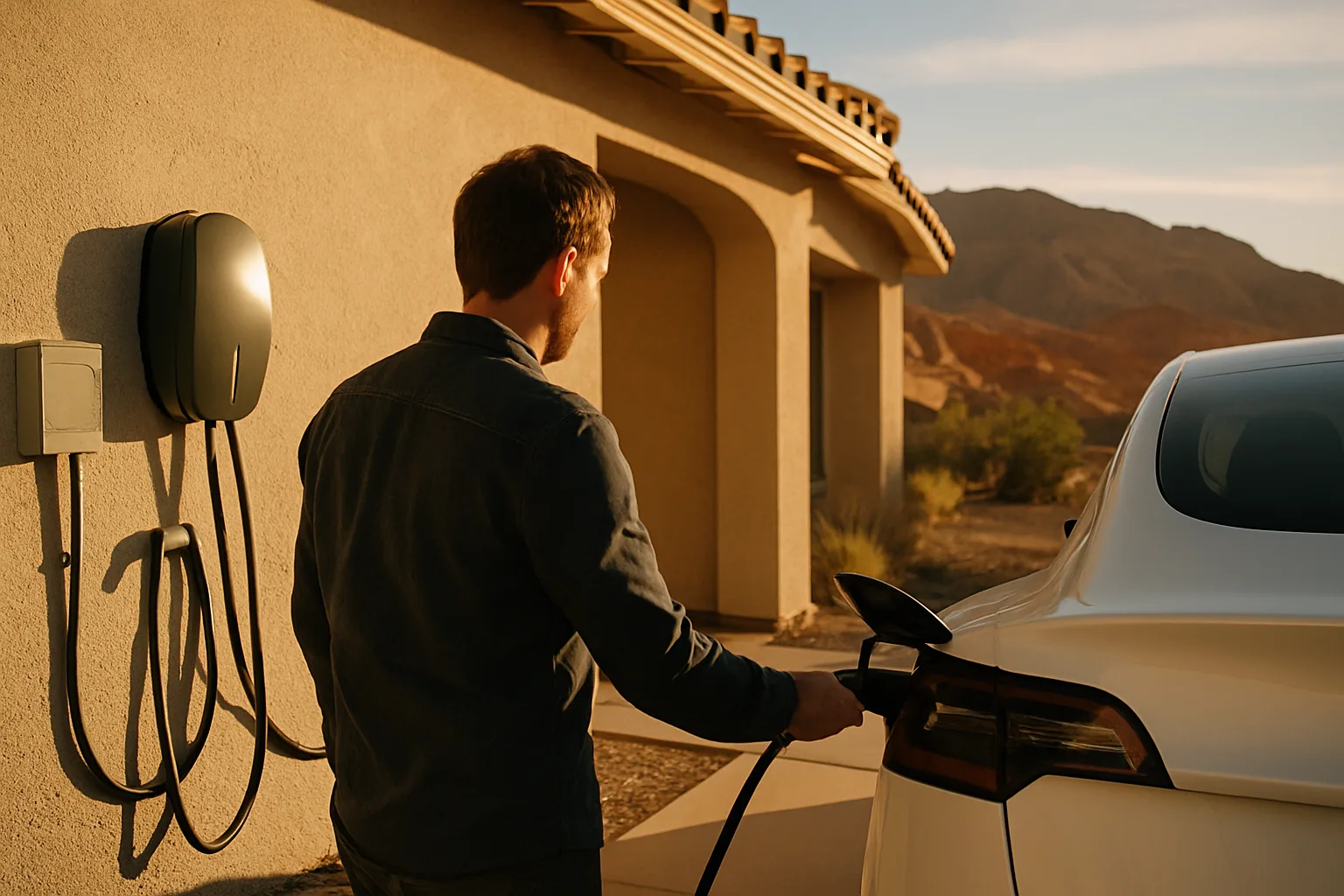
The cost of a charger and installation typically will be in the range of $300–$800 for a basic home charging station.
The cost for labor can add a few hundred dollars more to the overall price depending on the charging station and where it is to be mounted in relation to the electrical panel. Many home charging stations require being mounted on an exterior wall, often at some distance from the electrical panel in the garage or basement.
This is another cost that many home buyers have not been aware of until it is too late.
As with the cost of the EV charging unit, rebates are also available through your utility provider. It is always a good idea to call ahead of time and confirm that there are any rebates available for the home that you are looking to purchase.
None of this needs to be a deterrent, though. All of this can be figured out by opening your eyes and recognizing the potential costs of something before you sign on the dotted line. If you're relocating from out of state, it's worth reading up on how to plan your out-of-state home purchase so these details don't catch you off guard at closing.
Insurance Is Part of the Picture Too
After buying your car and your house, it is a good idea to check whether your auto insurance policy will cover your EV in the same way as your old gas guzzler. If not, you may find that you have to pay more for EV insurance in Nevada than you anticipated.
Another thing to consider before signing on the dotted line is how your current auto insurance will cover repairs to your new EV. Auto policies typically are not designed to cover the repair of high-cost parts or to cover the entire cost of replacing a car's battery.
So, before you start house shopping, do some research on EV insurance to see how it works and how it will affect your current premiums. Rates for EV insurance can vary based on the location of the vehicle and the type of vehicle it is.
Nevada, with its long highway stretches through the desert, is a unique location that many auto insurers consider when determining insurance rates for EVs.
These costs are generally small but need to be factored into your budget. Being aware of these additional costs is a small step that will save you from having an unpleasant surprise a few months after you have moved to Mesquite and are parked in your new driveway.
Location Still Matters More Than the Charger
While planning for the charger and insurance is a new aspect to consider, the fundamentals of home buying in Mesquite remain the same as before. Consider the commute distance to work, whether you work in St. George or Las Vegas, and whether you travel occasionally to other areas. The EV owner needs to consider how often they will need to charge along the way and the resulting range anxiety.
The EV owner must plan where and when to charge their car for each trip. This is unlike gas car owners, who must plan for how long their next trip will be.
To drive an EV, your home has to be in the right location as well. A house in Mesquite that is closer to town is better for an EV owner than a home way out in the country because the existing public charging stations are all in Mesquite. Even so, there are already some stations set up around town that EV owners can use for free.
In the long run, public EV charging stations will likely become more common in more locations as more EVs are purchased and as the industry matures. For now, public charging stations will generally be used as a backup to charge an EV after long trips, and will most often be used while the vehicle is being driven on long Interstate 15 trips into Las Vegas.
And the home of an EV owner will generally be equipped with Level 2 charging, which can fully charge an EV overnight, allowing the owner to wake up to a 100% charged vehicle every morning without ever having to go to a gasoline service station. Communities like Sun City Mesquite and Falcon Ridge feature newer construction that is often better suited to EV charging upgrades.
Putting It All Together
Home buying is a long list of things to check for any home, so it's only a few more things to check for EV owners.
Always be sure to check the electrical panel before falling in love with a kitchen. Budget for your charging station and the installation of the same. Then review your insurance to see how it may change as an EV owner in a new state.
Yes, for the most part, the city of Mesquite is a good place for the electric car owner to live. With a little prior planning, most EV owners will find that Mesquite is a good place to live. Mesquite offers a good climate and a slow pace of life as compared to the larger metropolitan cities of Las Vegas and St. George.
For the EV owner who plans, Mesquite can be a very comfortable place to live while charging your electric vehicle. To get a broader picture of what the market looks like right now, check out the 2026 Mesquite housing market guide before you start your search.
Frequently asked questions
Do homes in Mesquite, Nevada typically have EV charging already installed?
How far is Mesquite, Nevada from Las Vegas for an EV driver?
Are there public EV charging stations in Mesquite, NV?
What is the average home price in Mesquite, NV right now?
Is Mesquite, Nevada a good place to retire as an EV owner?
What should I look for in a Mesquite home inspection as an EV owner?
Homes for sale in Mesquite, Nevada
Thinking about a move to Mesquite?
Browse every active listing — Sun City 55+, golf-course homes, new construction and more — updated multiple times a day. Or talk to a local agent who knows the neighborhoods.
Keep reading
More from the blog

I-15 Between Mesquite and Southern California: What Is Changing on the Drive
Where Mesquite's $700K+ Homes Sell: Golf, View and Custom-Home Areas in 2026

Rachel's Remnants Soak Southern Nevada: What the Storm Meant for Mesquite