
Fix the Roof Before You List: A Retiree's Guide to Selling and Moving
Long-time owners often forget how much buyers scrutinize an aging roof. Learn which repairs pay off, when to replace or offer a credit, and how to manage work from afar.
If you are getting ready to trade snow shovels for golf carts, you are in good company. The National Association of Realtors’ 2025 Profile of Home Buyers and Sellers found that the typical home seller is now 64 years old and has owned the home for 11 years, both record highs. Long ownership has a side effect many sellers forget: the roof over your head has been aging the whole time, and buyers will look at it far more closely than you have in years.
Roof issues are among the most common findings in home inspection reports, right alongside electrical and window problems. The good news is that most of what turns up can be handled with residential roof repair in a day or two, at a fraction of what a new roof costs. Taking care of it before you list keeps your sale on schedule while you focus on the move to Mesquite or wherever the sun is calling you.
Why Buyers Look So Hard at the Roof
Today’s buyers are older and more cautious than they used to be. The same NAR report shows the typical repeat buyer is 62, and a quarter of all buyers are between 65 and 74. Many of them are making the same kind of move you are, and very few want to inherit a project on day one. Cash buyers are common in this age group too. Nearly 30 percent of repeat buyers in the NAR report paid all cash, and while they skip a lender’s appraisal, they rarely skip the inspection.
Lenders and insurers add pressure from their side. For FHA loans, HUD’s appraisal rules say the roof should have at least two years of remaining physical life, and appraisers must report it when that standard is not met. Insurance companies have tightened up as well. Some carriers will deny coverage once a roof reaches a certain age, require an inspection before writing a policy, or pay only the actual cash value of an older roof instead of the full replacement cost.
That means a buyer’s agent will likely ask about roof age and condition before an offer is even written. Clear answers put you in control of the conversation.
Start With a Roof Check Before You Call the Movers
The simplest way to avoid surprises is to find problems before a buyer’s inspector does. A pre-listing home inspection costs between $250 and $700, depending on where you live and the home's size, according to Zillow. Many sellers also ask a licensed roofer for a separate roof evaluation, since a roofer will walk the surface and look closely at flashing and vents. In Nevada, anything a seller's inspection finds must then be disclosed.
Ask for a written report with photos. You want to know three things: what needs fixing now, what is wearing but still serviceable, and roughly how many years of life the roof has left. That last number will matter to buyers, appraisers and insurers alike.
If you can, schedule the inspection before you start packing. Once boxes fill the attic and closets, it gets much harder for anyone to check ceilings, attic decking and insulation for signs of old leaks.
The Repairs That Usually Pay Off
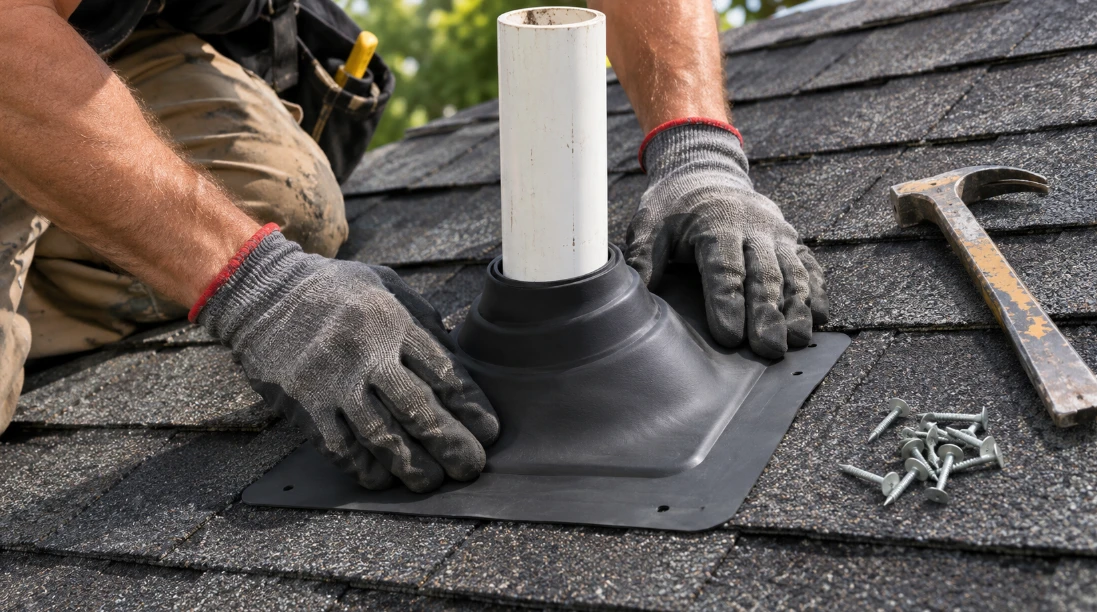
Most roofs on well-cared-for homes need only small fixes before a sale. These repairs are inexpensive compared with what they can cost you in negotiations if a buyer’s inspector flags them. National averages give a useful starting point:
Repair | Typical cost range | Why buyers care |
General roof repair (national average $1,150) | $400 to $1,900 | Shows the roof has been maintained |
Vent pipe boot repair or replacement | $75 to $250 | Cracked boots are a common leak source |
Damaged or missing shingles | $80 to $1,700 | Visible from the street and in listing photos |
Cracked flashing | $200 to $900 | Leaks at chimneys and walls stain ceilings |
Skylight leak repair | $300 to $800 | Water stains near skylights alarm buyers |
Pipe boots deserve special mention. They are the rubber seals around plumbing vents, and once the rubber cracks, water can slip in and stain the ceiling below. Replacing them is quick work for a roofer, and a fresh boot removes one of the easiest items for an inspector to flag. While the crew is up there, ask them to clear the gutters and confirm the downspouts carry water away from the foundation, since overflowing gutters tend to end up in inspection photos.
Water stains inside the house matter as much as the roof itself. If an old leak was fixed years ago but the ceiling stain is still there, buyers will assume the worst. Once the repair is confirmed, have the stain sealed and painted, and keep the paperwork showing the leak was fixed.
Repair, Replace or Offer a Credit
Sometimes the inspection shows the roof is near the end of its life. Asphalt shingle roofs typically last 15 to 30 years, according to This Old House, so a roof installed when you moved in two or three decades ago may be close to the end of its life. At that point you have three choices.
Replacing the roof before listing removes the question entirely, though you will not get all of the money back. The 2025 Cost vs. Value report puts the average asphalt roof replacement at $31,871, with about 68 percent of that cost recovered at resale. A full replacement makes the most sense in neighborhoods where every comparable listing advertises a new roof.
Offering a credit or a price reduction is often the easier path for sellers who are already living in another state. Buyers can pick their own contractor and materials, and you avoid managing a big project from a distance. Repairs sit in between. If the roof has several good years left, a few hundred to a couple of thousand dollars of repairs can carry it through the sale and give buyers confidence.
Your listing agent can tell you which approach local buyers respond to. In some markets, a credit is expected, while in others, buyers walk away from any house that needs roof work.
Managing Repairs From Far Away
Many retirees list their old home after they have already moved, or while splitting time between two places. Roof work can still go smoothly from a distance with a little planning:
Hire the roofer before you leave town, and walk the roof findings with them in person or by video call.
Get a written estimate that lists each repair, the materials and the price.
Ask for before-and-after photos of every repair, dated and labeled.
Request a written workmanship warranty and ask whether it transfers to the buyer.
Arrange access through a lockbox or your listing agent so the crew can get into the attic if needed.
Keep every invoice and warranty in one folder, digital and paper, for the disclosure form and the buyer.
Your listing agent can help here. Many agents keep a list of trusted local roofers and will meet the crew at the property so you do not have to fly back.
Disclosure and Paperwork
Seller disclosure forms in most states ask directly about past roof leaks and repairs. Be honest and specific. A disclosure that says a leak was found, repaired by a licensed roofer on a certain date, and backed by a transferable warranty reads very differently from a vague “previous leak, fixed.”
Keep the roof report from your pre-listing inspection too. Sharing it with serious buyers shows you have nothing to hide, and it often shortens the back-and-forth after their own inspection. If the roof is newer, include the installation invoice and the manufacturer’s warranty paperwork. Buyers and insurers will both ask for the roof’s age, and a document beats a guess every time.
Timing the Work Around Your Move
Roofers get busy after storms and during peak spring and summer seasons, so book early. A good rule is to have roof work finished four to six weeks before your listing goes live. That leaves time for any follow-up repairs, interior touch-ups and fresh listing photos that show a clean roofline.
Dry weather matters too. The self-sealing strips on asphalt shingles need warm sunshine to bond, and crews can only work safely on a dry roof. If your old home is in a snowy state, aim for late spring through early fall, then list while the yard looks its best.
Handling the roof before you list turns one of the biggest unknowns in a sale into a single page of paperwork. Buyers see a cared-for home, appraisers see years of remaining life, and you get to spend your first winter in the desert sunshine instead of on the phone negotiating roof credits with a buyer back home. Retirees heading south can also browse 55+ community homes in Mesquite or Sun City Mesquite, and the NAR buyer profile shows who will be reading your listing.
Frequently asked questions
Should I repair my roof before selling my house?
How much does a pre-listing home inspection cost?
How long do asphalt shingle roofs last?
Does a new roof pay for itself when selling?
Do I have to disclose past roof leaks when selling?
When should I schedule roof work before listing my home?
Homes for sale in Mesquite, Nevada
Thinking about a move to Mesquite?
Browse every active listing — Sun City 55+, golf-course homes, new construction and more — updated multiple times a day. Or talk to a local agent who knows the neighborhoods.
Keep reading
More from the blog
Nevada's C-Minus Housing Grade: What It Measures and Where Mesquite Fits
Pre-Listing Home Inspections in Nevada: What Sellers Gain and What They Must Then Disclose

I-15 Through the Virgin River Gorge: What Mesquite Residents Should Know About the Drive to St. George