Which Electric Chainsaw Works Best for Small Property Jobs?
Electric chainsaws have become the practical choice for small property maintenance — no fuel mixing, less noise, and lower running costs. This guide breaks down corded vs cordless options, the bar lengths and power ratings that match common garden tasks, and the safety features every buyer should confirm before purchasing.
Most homeowners with a small block don't need a petrol chainsaw. The noise, the fuel mixing, the pull-start frustration — none of it justifies the hassle of trimming a few branches or cutting up a fallen limb. Electric chainsaws have quietly become the sensible choice for light to medium garden tasks, and what's available in 2026 makes it genuinely easy to find a model that fits your block size and budget.
The real question isn't whether to go electric — it's which type of electric chainsaw suits your specific property jobs, and what specs actually matter for the work you're doing.
Corded vs Battery-Powered: Which Setup Suits Your Block?
The first decision you'll face is whether to go corded or cordless. If you look at electric chainsaws for garden work across different setups, you'll notice corded models deliver consistent power without battery management — ideal for fixed tasks close to the house. Cordless battery-powered models trade that consistency for freedom of movement across larger or more irregular blocks.
Corded chainsaws typically run on 1,800 to 2,400 watts and handle regular pruning, branch clearing, and cutting logs near a power outlet. They won't run out of charge mid-task, and they cost far less than equivalent battery models. But there's a catch: you're tethered to an extension cord, which creates real friction on uneven terrain or when working away from outdoor power points.
Battery-powered options have improved dramatically. A quality 40V or 60V cordless chainsaw now tackles most small property jobs without trouble, and the convenience factor is hard to ignore. If your block has trees spread across the yard or you don't want to run a long cord through garden beds, a cordless model is probably your better choice. Just budget for a spare battery if you're planning longer sessions.
Bar Length and Power: Matching the Saw to the Job
Bar length is one of the most misunderstood specs for home users. Many people assume longer is better, but on a small property with standard garden trees and shrubs, a 30 cm to 40 cm bar is plenty. Longer bars are heavier, harder to manoeuvre in tight spots, and add unnecessary bulk for lighter work.
For cutting branches up to 20 cm in diameter — which covers most residential pruning and storm cleanup — a 35 cm bar paired with a motor rated at 1,800 watts or 40V delivers clean, controlled cuts. You won't experience the fatigue that comes with a larger machine. Stepping up to a 40 cm bar gives you useful clearance without crossing into full-sized territory if you occasionally cut larger sections of fallen timber.
Power matters more when you're cutting hardwoods: ironbark offcuts, gum tree limbs, or thick wattle. An underpowered motor bogs down quickly. Look for a model rated at 2,000 watts or above for corded, or 40V to 60V for cordless, if you know your property has dense timber species. That extra capacity keeps the saw from labouring through every cut, and the tool's working life extends considerably as a result.
Safety Features Worth Checking Before You Buy
Electric chainsaws are far safer than petrol models, but that doesn't mean safety features are optional. The two you should always confirm before purchase are a chain brake and a low-kickback chain.
A chain brake stops the chain almost instantly if kickback occurs — this sudden upward snap of the bar causes most chainsaw injuries, even on light property tasks. Any current electric chainsaw should include a chain brake as standard, but confirming beats assuming.
A low-kickback chain reduces the rotational energy that causes sudden bar movement. Most entry-level models come fitted with these now. Beyond those two, look for:
A trigger lockout that prevents accidental starts
A chain catcher that stops a broken chain from flying back toward the operator
A handguard positioned to protect your left hand during use
An automatic chain oiler to keep lubrication consistent and reduce chain wear
These aren't premium add-ons; they're baseline expectations on any chainsaw you'd trust for regular property maintenance. Reputable suppliers stock models that meet or exceed these standards.
Matching the Electric Chainsaw to Your Task Type
Different jobs around a small property call for slightly different specs. Match the saw to your most common tasks rather than buying for the occasional big job.
Regular Hedge Trimming and Light Branch Work
A compact corded model in the 1,800-watt range with a 30 cm bar gives excellent control. These are usually the lightest options available — often under 4 kg — which matters when you're working overhead or in awkward positions for extended periods.
General Yard Cleanup
For fallen branches and small log firewood, a mid-range cordless model at 40V with a 35 cm to 40 cm bar is most practical. You get mobility across the property and enough power to handle denser wood without struggle. Models in the $150 to $350 AUD range hit this sweet spot.
Occasional Larger Tasks
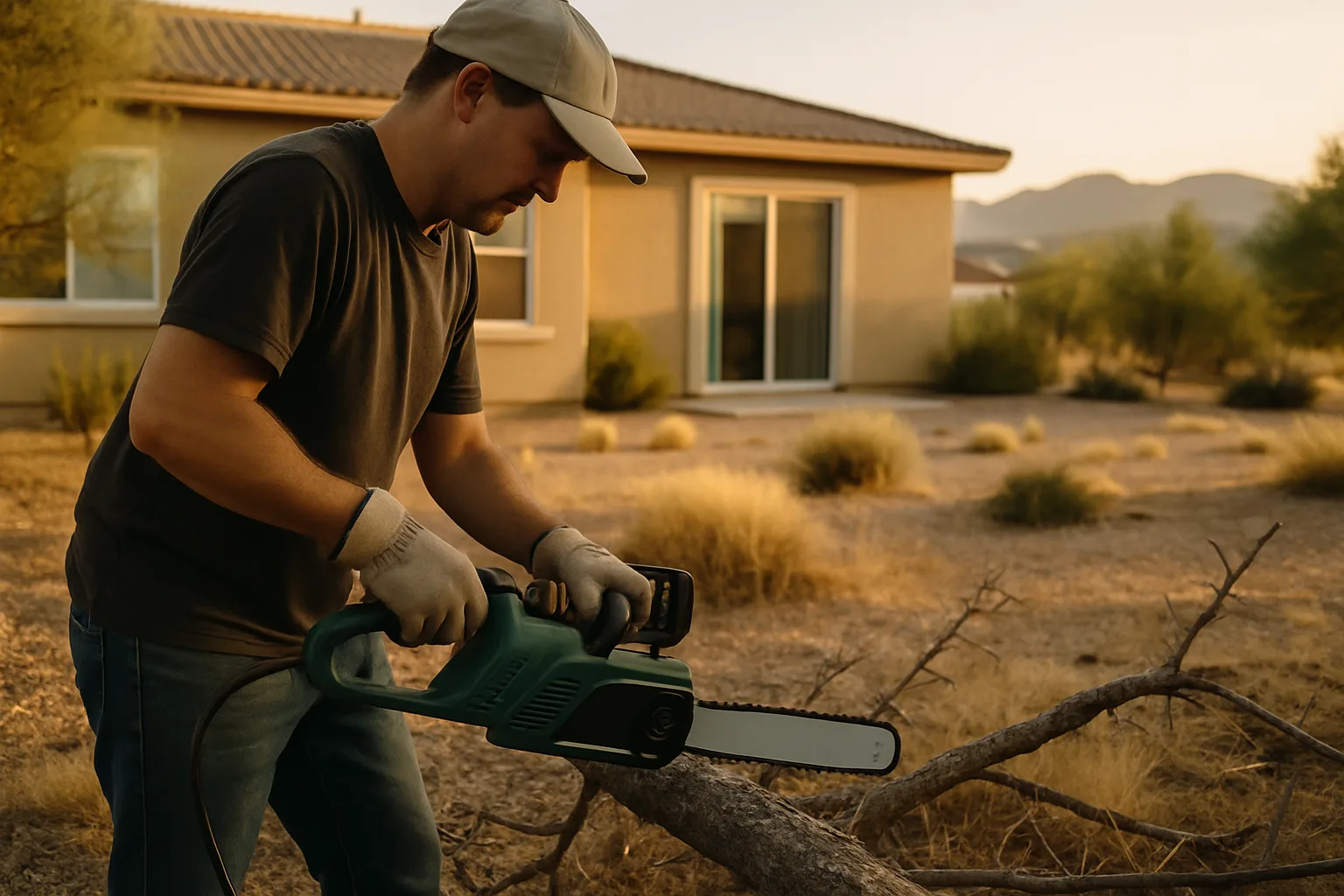
For removing a small tree or processing a bigger fallen trunk, a 60V cordless or a 2,400-watt corded saw with a 40 cm bar handles the work cleanly. You probably don't need this spec for everyday jobs, but if your block has mature trees or you're planning removal work, it's the practical upper end for electric tools before stepping up to petrol.
Maintenance and Running Costs on Small Property Electric Saws
One of the clearest advantages of electric chainsaws over petrol is the lower ongoing cost. There's no fuel to mix, no carburettor to clean out after non-use, and no spark plugs to replace.
The main consumables are the chain, the bar, and the bar oil. A replacement chain costs $15 to $40 AUD, depending on the type and length. Bar oil is inexpensive and widely available; the chain itself needs regular sharpening every three to five uses for regular work — sooner if you hit soil or gravel, which blunts the cutters fast.
Keep chain tension adjusted correctly. A chain that's too loose can derail and cause damage; one that's too tight creates excess friction and accelerates wear on both the chain and the sprocket. Most modern electric chainsaws include tool-free tensioning systems that make this a quick check before each use. Store the saw with the bar cover on and the chain lightly oiled, and it'll be ready next season without issues.
Conclusion
Choosing an electric chainsaw for small property work comes down to three honest questions: How far do you need to move from a power point? How thick is the timber you'll cut most often? How much do you want to spend? A corded 1,800 to 2,000-watt model with a 35 cm bar handles the majority of residential jobs. A 40V to 60V cordless saw adds flexibility for larger blocks. Match bar length and power rating to your most common task, check the safety features, and keep the chain sharp.
Frequently asked questions
Is an electric chainsaw powerful enough for cutting tree limbs on a small property?
What bar length should I choose for a small residential block?
How often does an electric chainsaw chain need sharpening?
What safety features are essential on an electric chainsaw?
Is a corded or cordless electric chainsaw better for home use?
What are the ongoing running costs of an electric chainsaw?
Homes for sale in Mesquite, Nevada
Thinking about a move to Mesquite?
Browse every active listing — Sun City 55+, golf-course homes, new construction and more — updated multiple times a day. Or talk to a local agent who knows the neighborhoods.
Keep reading
More from the blog

I-15 Between Mesquite and Southern California: What Is Changing on the Drive

Where Mesquite's $700K+ Homes Sell: Golf, View and Custom-Home Areas in 2026

Rachel's Remnants Soak Southern Nevada: What the Storm Meant for Mesquite