What Size Solar Panel Do I Need for a Gate Opener? A Complete Guide for Nevada Homeowners
Choosing the right solar panel size for a gate opener is essential for ensuring reliable performance, efficient battery charging, and long-term system durability. The ideal panel size depends on factors
Choosing the right solar panel size for a gate opener is essential for ensuring reliable performance, efficient battery charging, and long-term system durability. The ideal panel size depends on factors such as gate weight, usage frequency, battery capacity, and local sunlight conditions. Understanding these variables helps you select a solar setup that keeps your gate operating smoothly without interruptions.
What Size Solar Panel Do I Need for a Gate Opener?
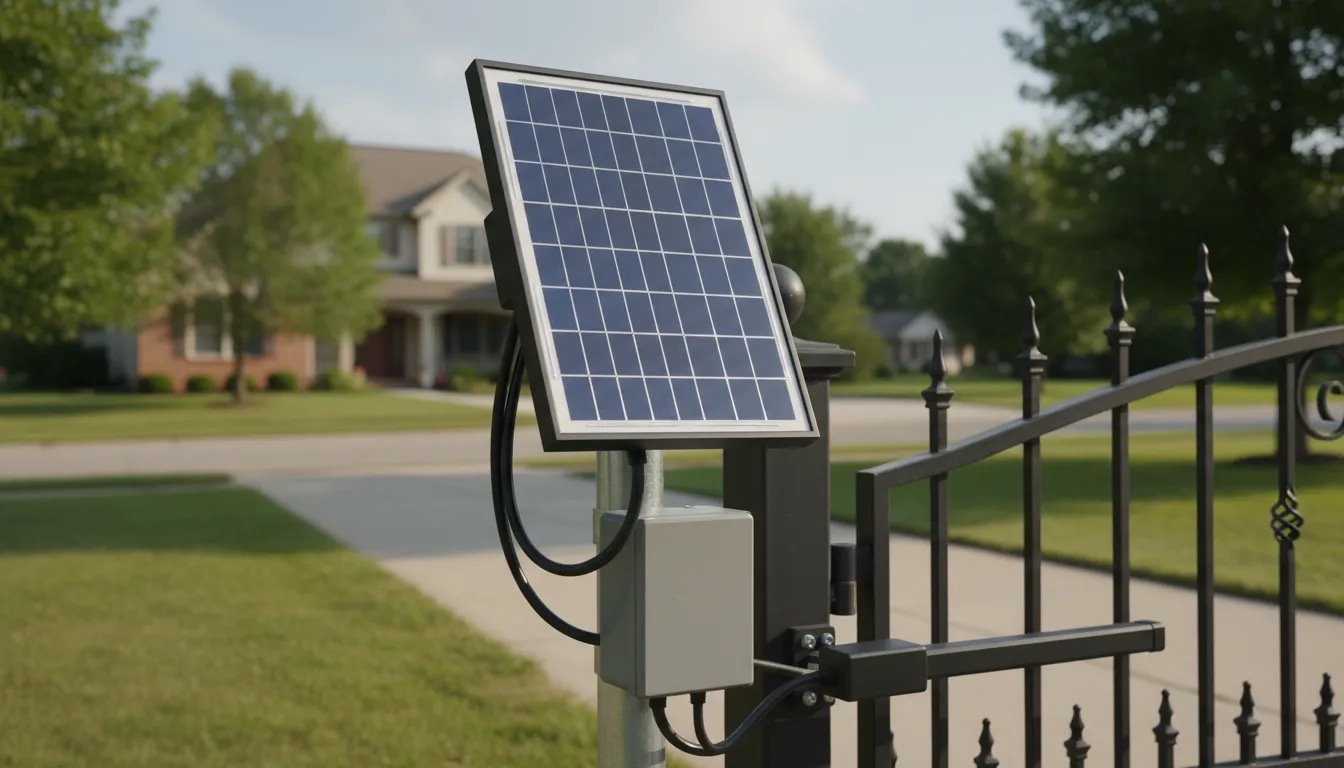
Choosing the right solar panel size for a gate opener depends mainly on how often the gate is used, the power requirements of the motor, and how much sunlight the installation site receives. For most residential systems, a 10W to 30W solar panel is typically sufficient, with 30W being the most recommended all-around option for reliable daily performance.
A 10W panel is usually suitable for light-duty gate systems in locations with strong, consistent sunlight and very low usage, such as a vacation home or a rarely used driveway gate. In contrast, a 30W panel is better suited for standard residential gates with moderate daily use, providing a more stable energy supply even during cloudy days or seasonal changes.
For heavier gates, high-traffic entrances, or properties in areas with limited sunlight, a larger system may be required. In these cases, a 40W to 60W solar panel setup, or even multiple panels connected together, can help ensure continuous operation without draining the battery too quickly. Some commercial or industrial gate systems may require even higher wattage depending on motor size and cycle frequency.
Key Considerations for Sizing Your Solar Panel
Usage Frequency
The more often your gate opens and closes, the more energy it consumes. If your system operates more than 8 to 10 cycles per day, it is generally recommended to use a 30W or higher solar panel to maintain consistent charging and avoid battery depletion.
Sunlight Availability
Solar performance varies significantly by location. In sunny regions like Nevada, where most areas receive over 290 days of sunshine per year, a smaller panel may be sufficient. However, in cloudy, shaded, or northern climates, a higher-wattage panel is needed to compensate for reduced solar input and ensure reliable performance year-round.
Battery Capacity
Your solar panel must work in harmony with the battery system. Most gate openers use 12VDC or 24VDC batteries, typically ranging from 20Ah to 35Ah for residential setups. A properly sized battery stores enough energy to keep the gate operational during cloudy days or nighttime usage.
Voltage Compatibility
Always ensure the solar panel voltage matches your gate opener system requirements. Most residential systems operate on 12VDC or 24VDC, which directly influences the correct panel configuration.
Solar Charge Controller (Regulator)
For systems using panels above 10W, a solar charge controller is often required unless it is already built into the gate opener. This device prevents overcharging, protects the battery, and ensures efficient energy management.
Final Recommendation
For most homeowners, a 30-watt solar panel offers the best balance of efficiency, reliability, and cost. It provides enough power to handle everyday use while maintaining battery health even during periods of lower sunlight. Only choose smaller or larger systems based on specific usage conditions and environmental factors.
For users looking for compatible and reliable solutions, brands like zumiaccess.com offer solar gate opener systems and accessories designed to match different power and installation requirements, helping ensure better compatibility between panels, batteries, and gate operators.
How Much Sun Does a Solar Gate Opener Need?
A solar gate opener typically needs about 3 to 6 hours of good direct sunlight per day, often referred to as peak sun hours, to stay properly charged and operate reliably.
In most residential setups, this amount of sunlight is enough because the system stores energy in a battery and uses that stored power to run the gate throughout the day and night.
With consistent 4 to 6 hours of sun, the system usually performs at its best, maintaining battery health and ensuring smooth operation even with regular daily use. Nevada homeowners benefit from some of the highest average peak sun hours in the country, making solar-powered gate systems an especially practical choice for properties throughout the state. In areas with only 3 to 4 hours of strong sunlight, a solar gate opener can still function well if the panel and battery are correctly sized, although performance may be more dependent on energy storage.
However, in locations with less than 3 hours of effective sunlight due to weather, seasonal changes, or shading, a larger solar panel and higher-capacity battery are often required to maintain reliability.
Differences Between 24VDC and 12VDC Solar Panels
Solar panels for gate openers are commonly available in both 12VDC and 24VDC versions, even when they share the same wattage, such as a 10W 12VDC panel and a 10W 24VDC panel. The key difference is the voltage system they are designed to support, which must match the gate opener's battery and control system for proper operation.
A 12VDC solar panel is typically used in standard residential gate opener systems that run on a 12V battery. These setups are common for light to medium-duty driveway gates and are generally easier to install and more widely compatible with basic home automation systems. In contrast, a 24VDC solar panel is intended for higher-powered systems that use a 24V battery configuration. These are more often found in heavy-duty residential gates, commercial entrances, or applications where stronger performance and improved efficiency are needed.
Matching the correct voltage is essential because the gate opener's accessory power rating determines how the system charges the battery. If the wrong voltage panel is used, it can lead to inefficient charging or potential damage to the control board. For this reason, always confirm whether your gate opener supports 12VDC or 24VDC before selecting a solar panel.
From a performance perspective, 24VDC systems can be more efficient in larger installations since they reduce current flow, which helps minimize power loss over longer cable distances. However, for most residential properties, 12VDC systems are usually sufficient and more cost-effective.
Climate and Sun Coverage for Solar Panels
Climate and sunlight availability play a major role in how well a solar gate opener performs. If you live in a colder region or an area that receives limited direct sunlight throughout the year, a 10W solar panel is often not enough to maintain consistent performance. In these cases, installers typically recommend upgrading to a higher-wattage panel or using two solar panels in combination to ensure the system receives sufficient energy to keep the battery charged.
It is important to consider that solar performance is not only about temperature, but also about sun exposure and daily usage patterns. Even in colder climates, a gate opener can function effectively if it receives enough peak sunlight hours. However, when sunlight is weak, inconsistent, or frequently blocked by clouds, trees, or buildings, the system may struggle to maintain charge levels, especially during periods of frequent gate use.
A practical way to evaluate your system is to monitor its performance during normal operation. If you notice that the motor slows down, hesitates, or struggles to operate even when the sun is out, this is often a sign that the solar panel is not generating enough power to keep up with demand. Similarly, if the gate is used frequently throughout the day and the battery level drops faster than it can recharge, the system may be underpowered.
In such situations, the most effective solution is to upgrade to a larger solar panel or add a second panel to increase total energy input. This helps ensure the battery remains fully charged and reduces the risk of system interruptions. For users in northern regions or areas with long winters and shorter daylight hours, a larger solar setup is especially important, even if a smaller panel like 10W works in other locations under different conditions.
Ultimately, solar gate opener performance depends on a combination of local climate, sunlight exposure, and usage frequency, meaning that the same setup may perform very differently from one location to another. Choosing a properly sized system based on real-world conditions is the key to reliable, long-term operation.
Conclusion
For most residential gate openers, a 10W to 30W solar panel is typically sufficient, with 30W being the most recommended option for balanced performance and reliability. Light-use gates in sunny areas may operate well with 10W panels, while heavier or frequently used gates, or installations in low-sunlight regions, may require 40W to 60W or multiple panels. In Nevada, where abundant sunshine and gated communities are both common, solar-powered gate openers are a natural fit for homeowners looking for a low-maintenance, energy-efficient solution. Selecting the right size ensures consistent power supply, reduces battery strain, and improves overall system efficiency.
Homes for sale in Mesquite, Nevada
Thinking about a move to Mesquite?
Browse every active listing — Sun City 55+, golf-course homes, new construction and more — updated multiple times a day. Or talk to a local agent who knows the neighborhoods.
Keep reading
More from the blog

I-15 Between Mesquite and Southern California: What Is Changing on the Drive

Where Mesquite's $700K+ Homes Sell: Golf, View and Custom-Home Areas in 2026

Rachel's Remnants Soak Southern Nevada: What the Storm Meant for Mesquite