Before You Dig: A Homeowner's Guide to Safe Excavation in Mesquite, NV
Before you break ground on a pool, fence, or patio in Mesquite, NV, you need to know what's underground. This guide covers Nevada's 811 law, the limits of free utility locates, and when to hire a private gas line locator to protect your project and your property.
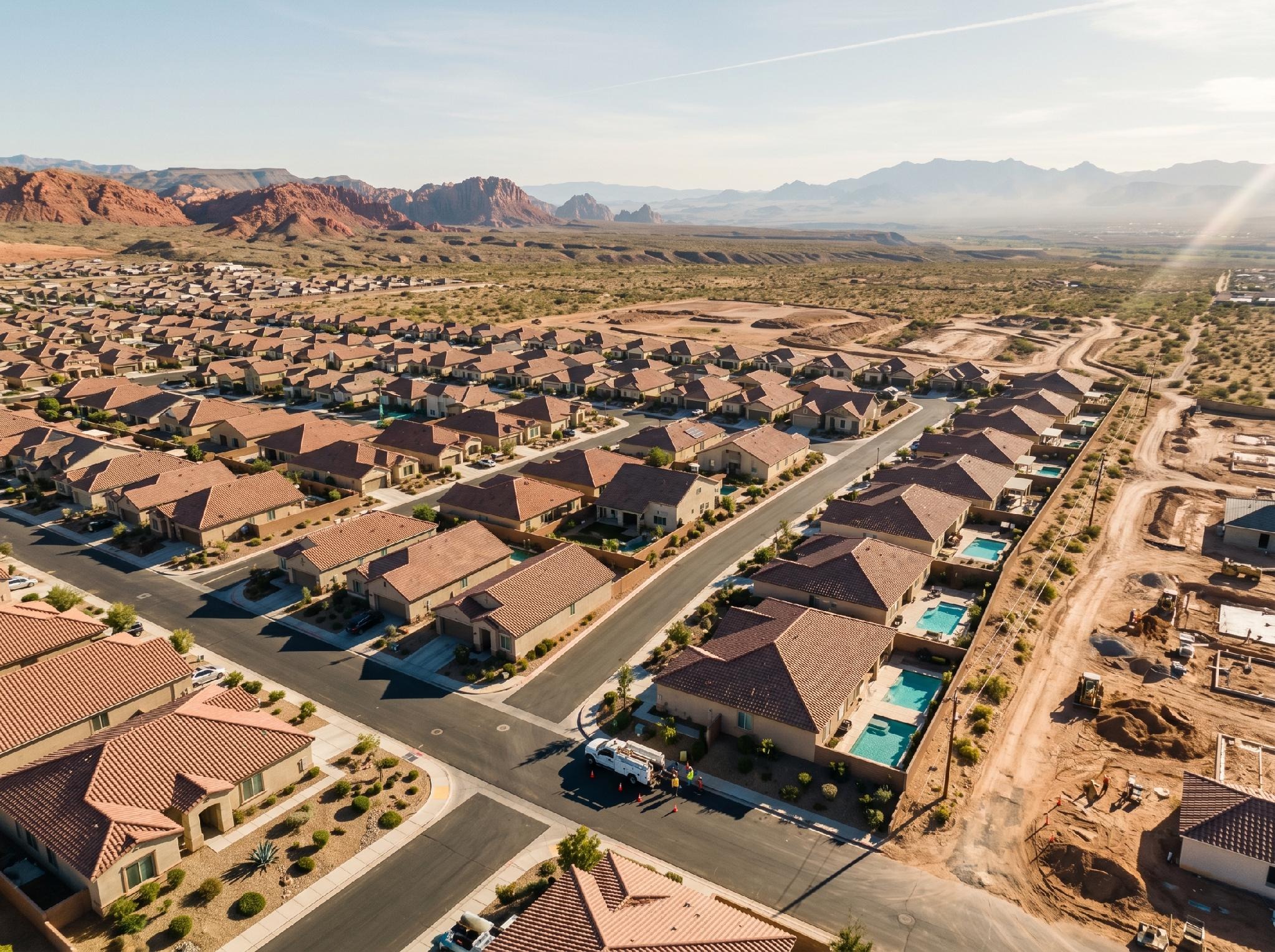
Aerial view of a growing Mesquite neighborhood near the Virgin River valley with the surrounding Mojave Desert landscape
Mesquite is growing fast - faster than any other city in Nevada. The population jumped from roughly 20,600 in 2023 to about 22,800 in 2025, and projections show it could pass 45,000 by 2041. That kind of growth brings new homes, new families, and a lot of backyard projects.
For many people moving here, the appeal is obvious. Mesquite sits in the Virgin River valley with red rock views, a mild desert climate, and plenty of room for outdoor living. New homeowners are adding pools, building patios, installing fences, and putting in outdoor kitchens. In May 2024 alone, the city issued 34 single-family residential permits. All those new homes mean a lot of ground is about to be broken.
But here's what most people don't think about: what's underground. Before you dig on any project, there are safety steps you need to take. Skip them, and a simple weekend project can turn into a gas leak, a fine, or worse. This guide covers what Mesquite homeowners need to know about calling 811, working with private utility locators, and planning projects that involve excavation. If you're still in the process of moving to Mesquite and evaluating what homeownership here involves, understanding what lies beneath your future yard is part of the picture.
Why Digging Without a Utility Locate Is Risky
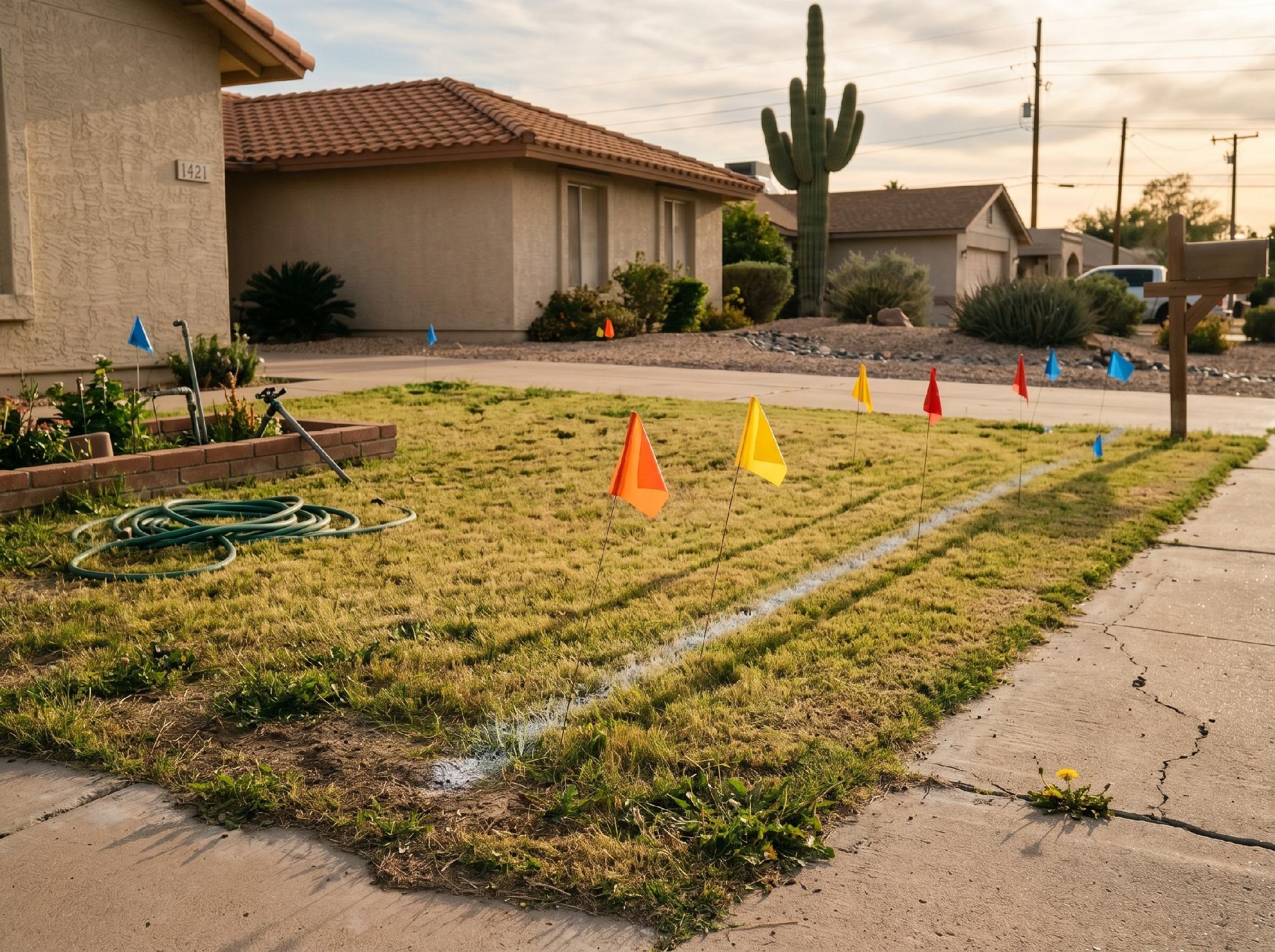
Utility marking flags use standardized colors: yellow for natural gas, red for electric, orange for communications, and blue for water lines
The numbers are sobering. The Common Ground Alliance reported in its 2024 DIRT report that underground utility damages cost the U.S. an estimated $30 billion annually. The report analyzed roughly 197,000 damage incidents, and the CGA Damage Prevention Index rose to 96.7 in 2024, up from 94.0 the year before. That means things are heading in the wrong direction.
Pacific Gas and Electric Company's 2025 data tells a similar story. The utility reported 471 underground gas and electric line damage incidents across its service area as of August 2025, and 59% of those did not involve a call to 811. For residential customers specifically, 90% of strikes happened without an 811 request.
These aren't abstract corporate problems. When a homeowner hits a gas line, the direct repair cost averages around $4,000. But the Common Ground Alliance found that for every dollar spent on direct damage, indirect costs add another $29. That means a $4,000 strike can carry a true cost of roughly $120,000 when you factor in fines, injuries, project delays, and environmental cleanup.
Homeowners in Mesquite can avoid these risks by working with Las Vegas private gas line locators who use ground-penetrating radar and electromagnetic technology to map every underground line on a property, not just the lines the utility company marks for free.
How Nevada's 811 Law Works for Homeowners
Nevada law takes digging seriously. Under NRS Chapter 455, anyone using mechanical equipment must call 811 before digging at any depth. Even hand tools require a locate request if you're digging deeper than 12 inches. The service is free, and it's coordinated through USA North 811.
Here's how the process works. You call 811 or submit a ticket online. Your request gets sent to every utility company with lines in your area. Within two full working days, utility crews come out to mark your property with color-coded paint and flags. Red means electric. Yellow means natural gas. Blue means water. Green means sewer. Orange means communications lines.
For more details on the process and your rights as a homeowner, the USA North 811 website explains how to submit a locate request and what to expect after you call.
The 811 Gap: Why Private Gas Line Locators Are Needed
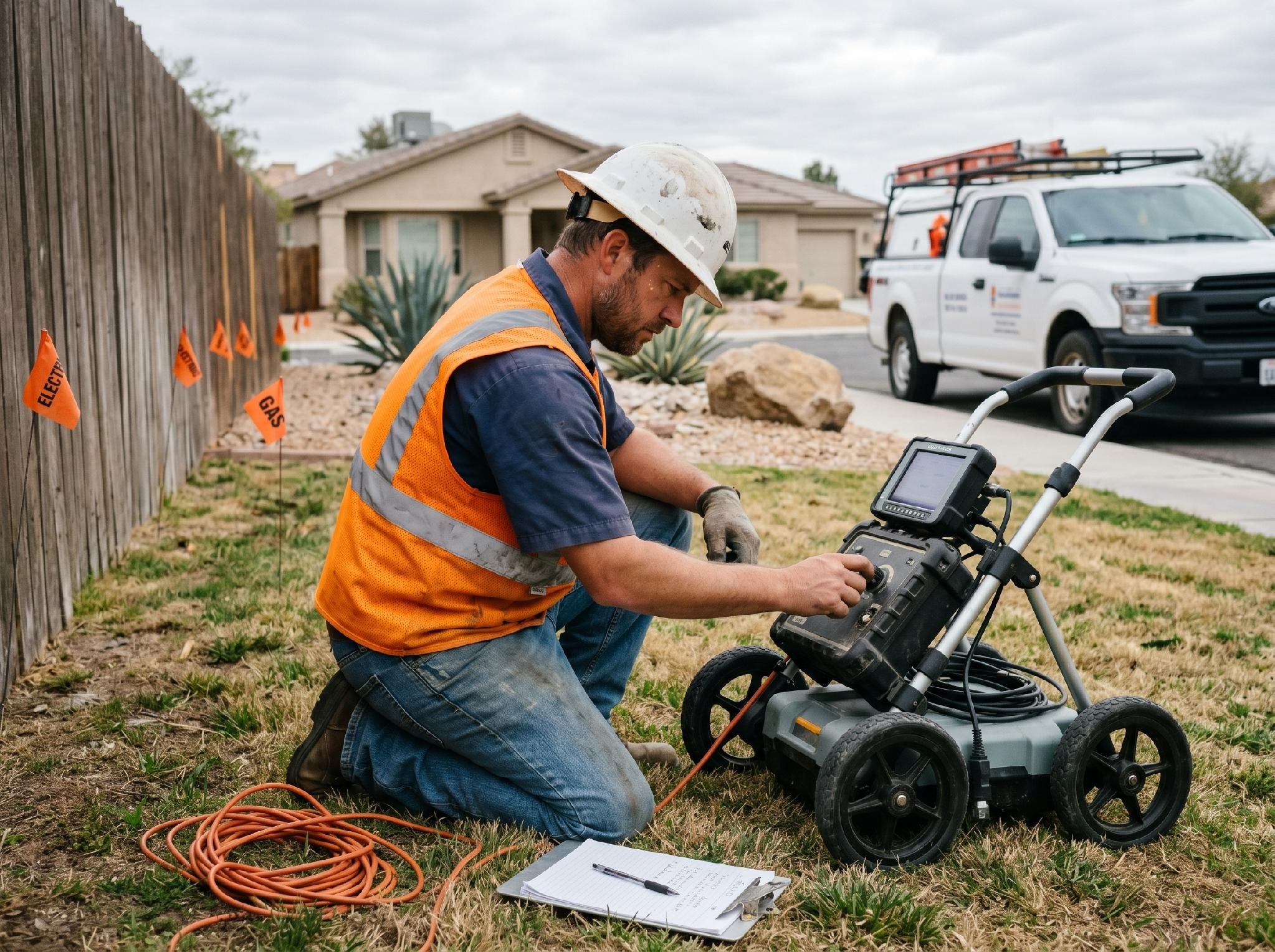
Private utility locators use ground-penetrating radar and electromagnetic technology to find gas and utility lines that 811 doesn't cover beyond the meter
Here's the part that catches a lot of homeowners off guard. When you call 811, the utility companies only mark the lines up to your meter. For gas, that's the line from the street to the gas meter on the side of your house. Everything beyond the meter is your responsibility.
That matters a lot in Mesquite. If you're running a gas line to a pool heater, an outdoor kitchen, or a detached garage, those lines aren't in 811's database. The utility company won't mark them. And gas lines are particularly dangerous. The Common Ground Alliance notes that natural gas distribution lines account for roughly 40% of all buried utility damages nationwide.
That's where private locators come in. These companies specialize in finding utility lines that run beyond the meter. They use ground-penetrating radar, electromagnetic tracing, and other technology to map the full extent of underground infrastructure on your property. According to the Common Ground Alliance's DIRT report, every dollar spent on utility locating saves an estimated $4.62 in potential damage costs. It's one of the best investments you can make before a digging project.
Top Home Improvement Projects in Mesquite That Mean Breaking Ground
Some projects clearly involve digging. Others might surprise you. If you're planning any of these, you need a locate request before you start:
Fence installation — Post holes typically go 2 to 3 feet deep, which puts them right in the zone where utility lines run. Most properties have gas, electric, or irrigation lines running near property lines.
In-ground pool or spa — Pool excavation goes 4 to 8 feet deep. This is major digging, and the equipment involved can easily shear through buried lines.
Desert landscaping and irrigation — Even shallow trenching for drip lines can hit gas lines or sprinkler wiring in established neighborhoods.
Outdoor kitchen with gas line — This one carries a high risk because you're deliberately running a new gas line. You need to know where existing lines are before you trench.
Patio or pergola with concrete footings — Footings often need to go 12 to 18 inches deep, and they're usually placed near the house where utility lines are most dense.
Shed or detached garage foundation — A small foundation requires excavation that can reach 3 to 4 feet, especially if you're running power to the structure.
If you're in the planning stages for any of these projects, our guide on the custom home building timeline covers what to expect when coordinating excavation work with contractors.
Steps for a Safe Digging Project
A few preparation steps before you dig can prevent delays, expensive repairs, and dangerous mistakes:
Pre-mark your dig area in white. This tells locators exactly where you plan to excavate.
Call 811 or submit a ticket online at usanorth811.org. Do this at least three working days before your start date.
Wait for all utility companies to respond. Check that every color marking is present before breaking ground.
Hire a private locator for lines beyond the meter. Don't assume 811 covered everything on your property.
Hand dig within 2 feet of marked lines. This is the tolerance zone, and it's where buried lines are most likely to run.
Know what to do if you hit a line. Stop immediately. If you smell gas, evacuate the area and call 911 from a safe distance.
Nevada's growing communities mean more construction and more excavation. Whether you're building new or renovating an existing home, our comparison of new construction vs resale in Mesquite breaks down what each path means for your timeline and your budget.
Plan Ahead, Dig Safe
Mesquite's growth story is exciting. New homes, new residents, and new possibilities for outdoor living in one of Nevada's most scenic valleys. But that growth comes with responsibility.
Every year, hundreds of thousands of utility strikes happen across the U.S. because someone dug without checking what was underground. The good news is that almost all of them are preventable. A quick call to 811, a conversation with a private locator, and a few days of patience can keep a backyard project from becoming a disaster.
If you're shopping for a home in Mesquite or planning improvements on a property you already own, knowing the local landscape inside and out is part of the process. Take the time to plan your digging projects carefully. The ground beneath your feet holds more than you think.
Frequently asked questions
Do I have to call 811 before digging in my Mesquite backyard?
What does 811 actually cover on my property?
When should I hire a private utility locator instead of just calling 811?
What are the most common Mesquite home projects that require a utility locate?
What should I do if I accidentally hit a gas line while digging?
Homes for sale in Mesquite, Nevada
Thinking about a move to Mesquite?
Browse every active listing — Sun City 55+, golf-course homes, new construction and more — updated multiple times a day. Or talk to a local agent who knows the neighborhoods.
Keep reading
More from the blog
Apartment Door Numbers for Phased Residential Projects
Home Buying Affordability: Financial Planning for Mesquite
Moving to Mesquite, Nevada: 5 Trade-Offs to Evaluate Before Buying