Bathroom Partitions That Bring Privacy, Durability, and Style Together
Commercial restrooms shape how people experience a property, and partitions are at the center of that impression. This guide covers how to choose partitions that balance privacy, durability, and style for any commercial space.
Commercial restrooms rarely get the same design attention as lobbies, offices, dining areas, or storefronts. They are often treated as purely practical spaces. Pick the fixtures, choose the flooring, install the partitions, and move on.
But people notice more than you might think.
A restroom that feels clean, private, and thoughtfully designed can support the overall impression of a property. One that feels dated or poorly maintained can do the opposite. Loose doors, scratched surfaces, awkward gaps, and tired finishes stand out, especially when the rest of the building has been updated.
Partitions sit right in the middle of that experience. They affect privacy, appearance, durability, and daily maintenance, all at once.
That is why choosing them deserves a little more thought.
Why Restroom Design Matters
Think about the last commercial restroom you used.
Did it feel comfortable and well maintained, or did you notice damaged locks, worn surfaces, or an awkward layout?
Most people are not consciously studying restroom design. Still, they pick up on the details. A clean and functional space makes a property feel cared for. A neglected restroom can make even an attractive building feel less polished.
This matters in offices, restaurants, schools, retail spaces, medical facilities, and other commercial properties.
Restroom improvements do not always need to be dramatic. Often, replacing worn elements and improving the details people use every day can make the biggest difference.
Privacy Should Be Part of the Plan
Privacy sounds obvious, but it is easy to overlook during a renovation.
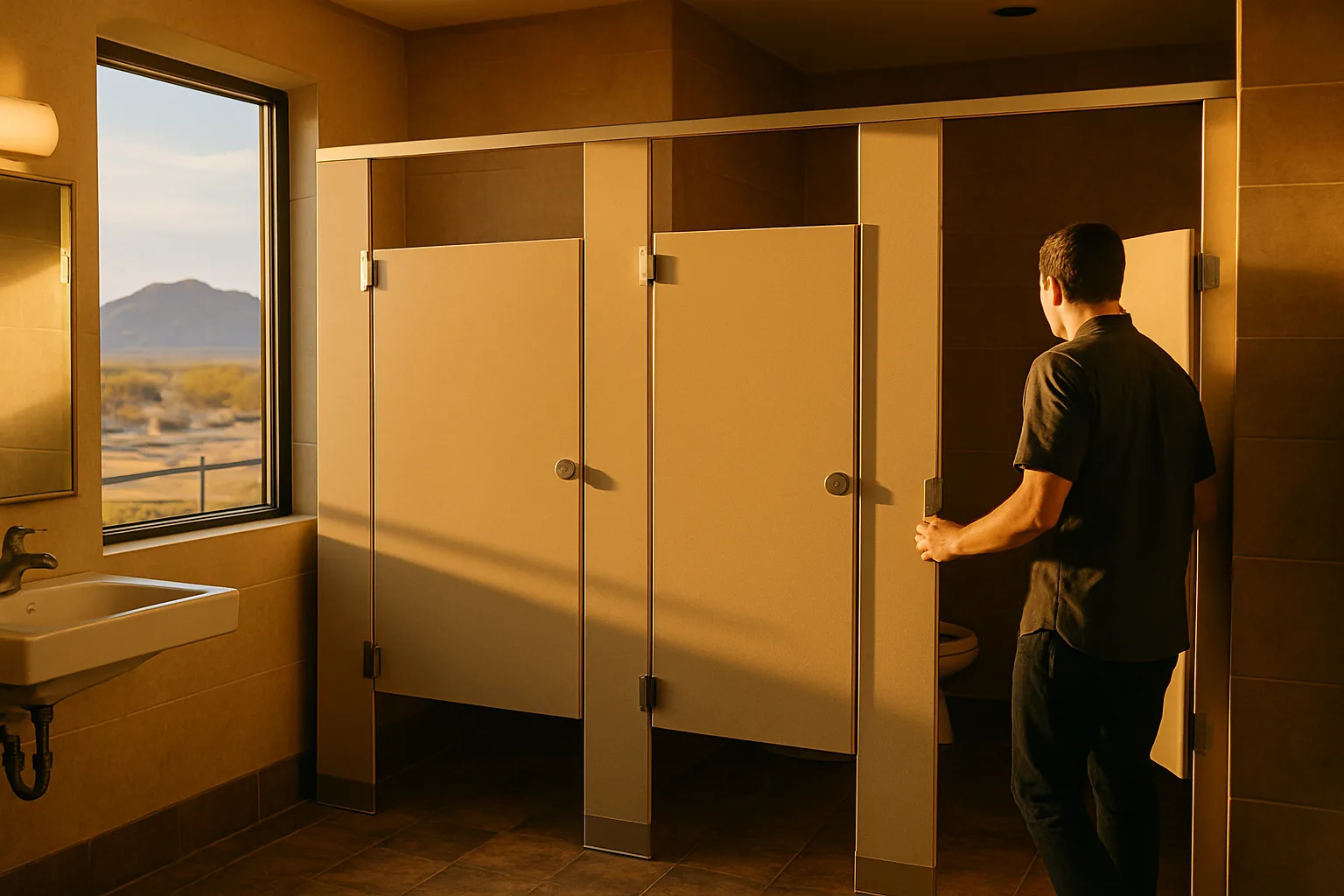
Partitions are not just dividers. Their height, placement, door alignment, and hardware all influence how comfortable someone feels inside the restroom.
Large gaps between doors and panels can feel awkward. A lock that does not work properly is frustrating. A door that shifts or does not close smoothly can make the whole stall feel poorly maintained.
These may seem like small problems, but they directly affect the person using the space.
So when you are planning a commercial restroom, think about the experience from the user's point of view. Can the stall be used comfortably? Does the door close correctly? Does the layout feel sensible?
Good privacy often goes unnoticed. That is exactly the point.
Choose Partitions for Real Life
It is tempting to choose partitions based mostly on appearance, but commercial restrooms have to deal with real world conditions every day.
Traffic levels matter.
A small office restroom may only serve a limited number of people. A restaurant, school, shopping center, or public facility could have people coming and going throughout the day.
That difference affects what materials make sense.
For example, property owners comparing Dallas bathroom partitions, considering daily traffic, moisture levels, cleaning routines, and the surrounding interior can help narrow down materials that make sense for the space.
It helps to think beyond how a material looks when it is brand new. How will it handle repeated cleaning? Will moisture be a concern? Is the surface likely to get scratched or dented? How much contact will doors and panels receive each day? The answers can point you toward options that are more suitable for the property.
Durability Is More Than Toughness
A durable restroom partition is not simply one that feels strong.
The environment matters too.
Moisture can be a major consideration, especially in restrooms that are cleaned frequently or where water regularly reaches surrounding surfaces. Some materials are better suited to damp conditions than others.
Then there is everyday wear. Doors are opened and closed constantly. Hardware gets handled. Panels can be bumped by bags, cleaning equipment, or regular foot traffic.
Over time, those small interactions add up.
A material that handles everyday use well can help the restroom maintain a cleaner, more cared for appearance.
Maintenance matters here too. Easy to clean surfaces can make life simpler for maintenance teams. They can also help prevent the restroom from looking worn shortly after a renovation.
Style Still Has a Place
Practical does not have to mean boring.
Commercial restrooms can feel stylish without becoming overly decorative.
Partitions take up a large amount of visual space, so their color and finish can help shape the room. Instead of choosing them separately from everything else, consider how they work with flooring, walls, countertops, mirrors, and fixtures.
A simple, coordinated palette can make the room feel much more intentional.
And you do not need to match every finish perfectly. Sometimes contrast works better.
A light floor paired with darker partitions can create a modern look. Warm neutrals can soften a space filled with harder materials. Simple gray or beige finishes can blend easily into a wide range of interiors.
The goal is not to make the restroom flashy. It is to make it feel connected.
Use Color to Change the Mood
Color has a surprisingly strong effect in smaller spaces.
Lighter shades can help a compact restroom feel brighter and more open. Warm white, pale gray, beige, and stone inspired colors are often easy to coordinate with different materials.
Darker tones create a different mood. Black, charcoal, and deep gray can make a restroom feel modern and polished, especially when the lighting is balanced.
Warmer or nature inspired colors can also work well when you want to move away from a clinical feel.
Before settling on a color, look at samples next to the flooring and wall finishes. Lighting can change how a shade appears, so something that looks perfect in a showroom may feel very different inside the actual restroom.
Hardware Can Make or Break the Experience
Hardware is easy to ignore until something stops working.
A loose latch, stiff hinge, or unreliable lock can quickly become one of the most noticeable parts of the restroom.
Good hardware needs to work smoothly and hold up to regular use.
Appearance matters too. Brackets, locks, and handles can coordinate with faucets, lighting, door hardware, or other metal finishes in the room. That small amount of consistency can make the whole design feel more finished.
Still, function should come first. A beautiful lock that does not work properly is not much use to anyone.
Connect the Restroom to the Property
A commercial restroom should not feel like it belongs in a completely different building.
If the surrounding property has a modern, minimal look, the restroom can carry that same simplicity through clean lines and restrained colors. If the property feels warmer and more traditional, softer tones and familiar finishes may fit better.
You only need a few visual connections. Maybe it is a repeated color. Maybe it is the same metal finish. Maybe the flooring shares a similar tone with another part of the property.
Small links like these create continuity without making every room identical. The same principle applies when interior design choices are made to help a property sell faster — cohesion across spaces always reads as intentional.
Make Maintenance Part of the Design
A restroom should still look good long after the renovation is finished.
That is why maintenance belongs in the design conversation from the beginning.
Consider which finishes show fingerprints easily. Think about how often partitions will be cleaned. Look at whether certain surfaces are likely to show scratches or water marks.
The easiest material to maintain may not always be the most decorative choice, but there is usually a balance between appearance and practicality.
And that balance matters. A restroom that can be cleaned efficiently and stays presentable through daily use will usually make a better long term impression.
Small Details Help Finish the Space
Partitions are important, but they are only one piece of the room.
Lighting, mirrors, flooring, wall finishes, signage, and accessories all contribute to the final result.
Good lighting can make colors look better and help the restroom feel cleaner. Mirrors can make smaller rooms feel more open. Simple signage can make the space easier to use.
None of these features need to be extravagant. In fact, restrained choices often work best. A few well coordinated details can make the room feel complete without overwhelming it. If you are also thinking about which rooms to update before listing a property for sale, the same principle of targeted, high-impact improvements applies.
Think About the People Using the Space
At the end of the day, commercial restroom design is about people.
Does the room feel private? Does everything work? Does it look clean? Is it comfortable to use?
Those questions are more important than following any particular design trend.
Most visitors will not walk out thinking about the partition material or the exact hardware finish. They will simply remember whether the restroom felt pleasant and cared for.
That is often the sign of a successful design. Everything works together without demanding attention.
Create a Restroom That Holds Up Over Time
The best commercial restrooms bring privacy, durability, and style together rather than treating them as separate goals.
Privacy helps people feel comfortable. Durable materials support long term use. Thoughtful colors and finishes make the space feel connected to the rest of the property.
None of these elements needs to overpower the others. A well planned restroom simply feels right.
For property owners and managers, that usually means choosing materials based on how the space will actually be used, thinking carefully about maintenance, and paying attention to the smaller details that affect everyday comfort.
Commercial restrooms may never be the most exciting part of a property renovation. But when they are designed thoughtfully, they can quietly improve the way people experience the entire building.
Frequently asked questions
What materials are best for commercial bathroom partitions in high-traffic spaces?
How do I choose the right bathroom partition height for privacy?
What is the most low-maintenance bathroom partition material?
How can I make a commercial restroom feel more stylish without a full renovation?
How does partition color affect the feel of a small commercial restroom?
What hardware features matter most in commercial bathroom partitions?
Homes for sale in Mesquite, Nevada
Thinking about a move to Mesquite?
Browse every active listing — Sun City 55+, golf-course homes, new construction and more — updated multiple times a day. Or talk to a local agent who knows the neighborhoods.
Keep reading
More from the blog

I-15 Between Mesquite and Southern California: What Is Changing on the Drive

Where Mesquite's $700K+ Homes Sell: Golf, View and Custom-Home Areas in 2026

Rachel's Remnants Soak Southern Nevada: What the Storm Meant for Mesquite