How to Calculate Whether a Mesquite Rental Property Is Actually Profitable
Buying a rental property in Mesquite is only the first step — the real challenge is knowing whether it will actually make money. This guide walks you through the key metrics every investor needs: gross income, vacancy rates, net operating income, cash flow, and cash-on-cash return.
Investing in real estate can feel like a great way to build wealth. When you look at the growing neighborhoods in Mesquite, Nevada, it is easy to see the appeal. The local market has plenty of potential. However, buying a property is only the first step. The real challenge is determining whether that specific Mesquite rental property will actually put money back into your pocket.
Too many investors buy a house based on a vague feeling or a quick look at the neighborhood. To succeed over the long term, you need a clear financial picture. You must look closely at the actual numbers to see if a property makes financial sense. If you are still weighing your options, our 2026 Mesquite housing market guide is a good place to start before running the numbers below.
Understanding Your Total Rental Revenue
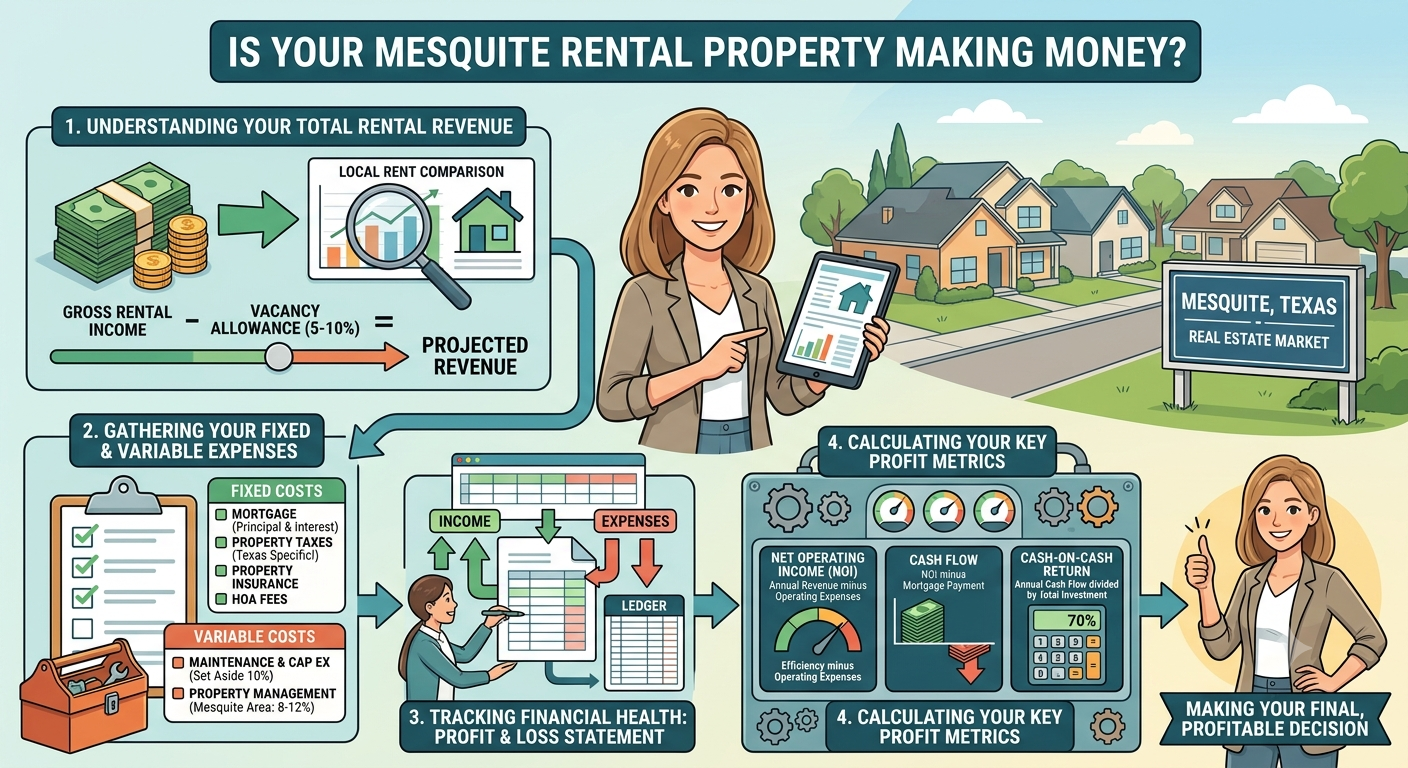
The foundation of your math starts with the money coming in. In real estate, this is your gross rental income. If you are looking at a property in Mesquite, you need to research what similar homes in the exact same neighborhood are renting for each month.
Do not guess this number. Look at local listings and talk to property managers who know the local market. If the average monthly rent for a three-bedroom home in your chosen Mesquite neighborhood is two thousand dollars, that is your starting point.
However, you cannot assume the property will be occupied every single day of the year. Tenants move out, and it takes time to find new ones. You might need to clean the carpets, paint the walls, or market the home. Because of this, you must factor in a vacancy rate. A safe estimate for the Mesquite area is usually around 5% to 10%. If you subtract a five percent vacancy allowance from your expected income, your projected revenue becomes more accurate.
Gathering Your Fixed and Variable Expenses
Once you know what you might earn, you have to look at what you will spend. Expenses are where many new investors lose track of their profit margins. It is helpful to break these costs down into two main categories: fixed costs and variable costs.
Fixed costs are the expenses that do not change much from month to month. Your mortgage payment is usually the highest fixed cost. This includes the principal and the interest on your loan. Property taxes in Nevada are relatively low compared to many states, but you should still check the specific tax records for your Mesquite parcel. Property insurance is another regular expense you must include. If the home belongs to a homeowners' association, those monthly or annual fees must be added to your fixed list too.
Variable costs are the expenses that change over time. Maintenance is the highest variable cost. A roof might last for years, but a water heater could break next month. A good rule of thumb is to set aside ten percent of the monthly rent for ongoing maintenance and future capital expenditures. Upgrades like premium windows and doors can reduce long-term maintenance costs and boost rental appeal.
You also need to think about how you will manage the property. Will you handle the midnight phone calls about a leaking pipe yourself, or will you hire a professional team? If you use a property management company in Mesquite, they typically charge between eight percent and twelve percent of the monthly rent. Even if you plan to manage it yourself in the beginning, it is smart to include this cost in your math so your calculations remain realistic for the future.
Tracking Your Financial Health
To keep all these numbers organized, professional investors rely on specific financial tools. The most important tool for this job is a profit and loss statement. This document acts as a clear financial scorecard for your investment. It lists all the actual revenue your property generates, along with every expense incurred during a specific period.
By updating this regular statement, you can see exactly where your money is going. It helps you track whether your Mesquite rental is performing as well as you hoped or if unexpected repair costs are eating away at your returns. It also makes tax season much simpler because all your deductions are already calculated and categorized. Hidden issues like water leaks are a common culprit that quietly erodes rental margins in Nevada properties — worth monitoring proactively.
Calculating Your Key Profit Metrics
With your revenue and expenses organized, you can now run the specific metrics that reveal true profitability.
Net Operating Income
The first major metric is Net Operating Income. To find this number, take your total annual rental income and subtract all your operating expenses. Operating expenses include taxes, insurance, maintenance, and management fees. They do not include your mortgage payment. Net Operating Income tells you how efficiently the property operates on its own, regardless of how you financed the loan.
Cash Flow
The next calculation is cash flow. This is the amount of cash left over after all bills, including your monthly mortgage, have been paid. To find your monthly cash flow, take your Net Operating Income, subtract your monthly mortgage payment, and see what remains. If the number is positive, the property is putting cash in your bank account. If it is negative, you are paying out of pocket to keep the investment alive. Most investors look for a positive cash flow of at least $200–$300 per unit per month.
Cash-on-Cash Return
Finally, you should calculate your cash-on-cash return. This metric shows the percentage return on the actual money you personally invested. To find it, divide your annual positive cash flow by the total amount of cash you paid to purchase the property. Your total initial investment includes your down payment, closing costs, and any immediate repair bills required to get the home ready for a tenant. If your annual cash flow is three thousand dollars and your total upfront investment was thirty thousand dollars, your cash-on-cash return is ten percent.
Making Your Final Decision
Calculating profitability requires looking past the excitement of owning real estate. By running these numbers carefully for the Mesquite market, you can avoid costly financial mistakes. A profitable rental property should support itself, pay down its own debt, and provide you with a reliable financial return for your hard work. If you are still deciding between property types, comparing new construction vs. resale homes in Mesquite can also affect your upfront costs and long-term maintenance projections significantly.
Frequently asked questions
Is buying a rental property in Mesquite, Nevada a good investment?
What is a good cash-on-cash return for a Mesquite rental property?
What vacancy rate should I use when analyzing a Mesquite, NV rental?
How much do property management companies charge in Mesquite, Nevada?
What are property taxes like for rental homes in Mesquite, NV?
How do I know if a Mesquite rental property will cash flow positively?
Homes for sale in Mesquite, Nevada
Thinking about a move to Mesquite?
Browse every active listing — Sun City 55+, golf-course homes, new construction and more — updated multiple times a day. Or talk to a local agent who knows the neighborhoods.
Keep reading
More from the blog

Mesquite vs. Las Vegas: What Second-Home and Rental Buyers Should Know

Where to Eat in Mesquite, NV: A Newcomer's Guide to the Dining Scene

Mesquite, NV Closing Costs in 2026: Who Pays What on Each Side